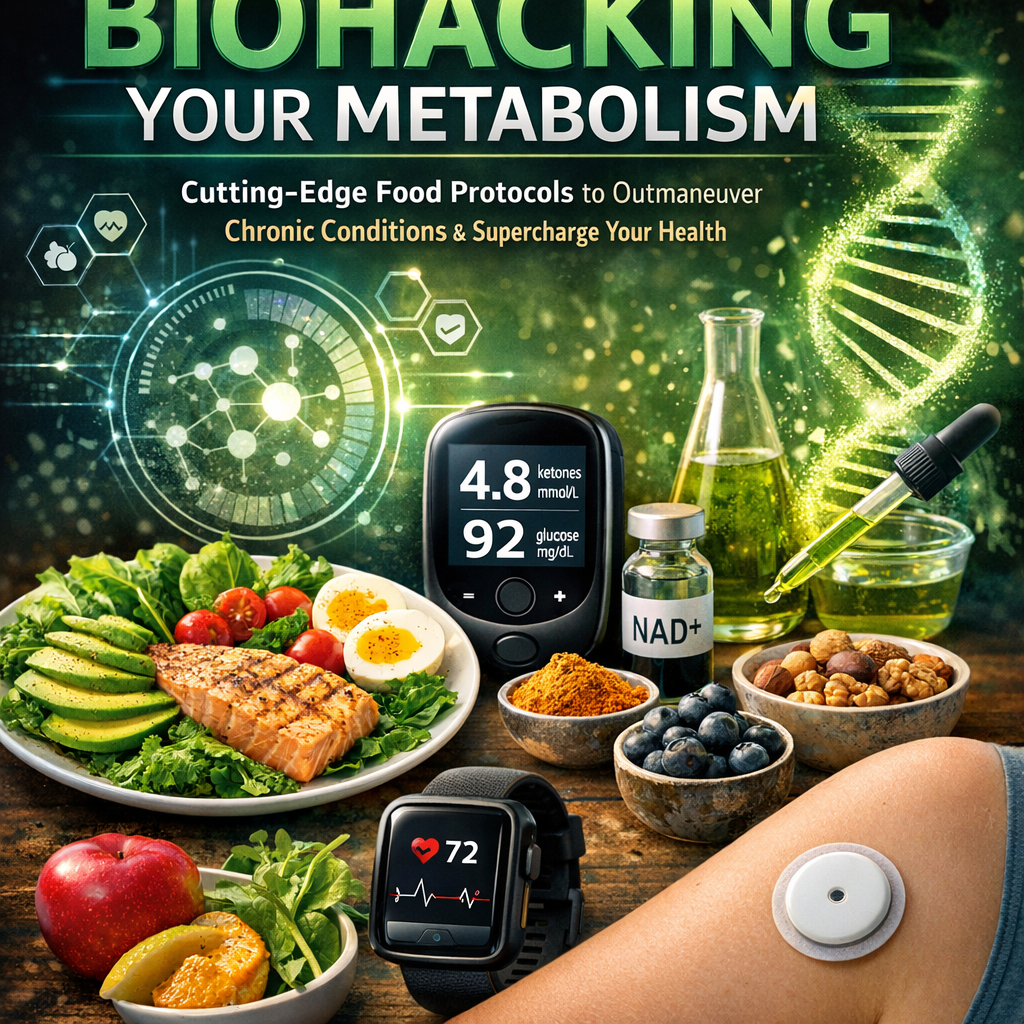
Biohacking Your Metabolism: Cutting-Edge Food Protocols to Outmaneuver Chronic Conditions and Supercharge Your Health
In an era where modern life subjects us to unprecedented stress and health challenges, the quest for holistic and sustainable wellness solutions has never been more pertinent. Biohacking, a concept often associated with self-experimentation and optimizing human performance, is now venturing into the realm of metabolism — the complex and dynamic biochemical process by which our bodies convert food into energy. By employing natural foods and protocols, biohacking offers an accessible, sustainable path.
Chronic conditions such as obesity, diabetes, and cardiovascular diseases are on a steady rise, driven largely by lifestyle factors and dietary choices. Metabolism, our body’s engine, plays a crucial role in determining how effectively we manage weight, energy, and overall health. By understanding and influencing metabolic processes, we can potentially outmaneuver these conditions and derive tangible health benefits. The concept of biohacking metabolism involves strategically using certain foods and habits to optimize these processes, making it an empowering tool for health management.
Innovative approaches such as incorporating adaptogenic herbs, embracing intermittent fasting, and prioritizing nutrient-dense whole foods have gained attention for their purported metabolic benefits. Adaptogens like ashwagandha and Rhodiola rosea are praised for their ability to reduce stress, a known disruptor of metabolic health. Intermittent fasting is a powerful strategy shown to enhance metabolism and promote longevity. The focus on whole foods aims to minimize processed food intake, reducing inflammation and improving digestive efficiency.
Expanding this understanding, intermittent fasting involves structured eating patterns that can include alternate-day fasting, time-restricted eating, or periodic fasting, each wielding benefits based on personal lifestyle and health goals. Meanwhile, adaptogens are increasingly recognized for their roles in stress response modulation, directly impacting metabolic stability.
While the allure of quick dietary solutions is understandable, it’s essential to approach metabolic biohacking with a mindset geared toward sustainable, long-term changes. Instead of drastic measures, these natural, science-backed protocols offer a pathway to gradually retrain the body’s metabolic processes, potentially unlocking higher levels of energy and resilience and mitigating the risks of chronic diseases. Understanding how specific foods and practices synergize provides a proactive approach to crafting a healthier future.
Features
Scientific studies provide both the foundation and validation for the efficacy of these biohacking food protocols. A 2019 study published in the [*New England Journal of Medicine*](https://www.nejm.org/doi/full/10.1056/NEJMra1905136) highlights the profound impact of intermittent fasting on metabolism and cellular repair mechanisms. It links fasting to improved insulin sensitivity, reduced inflammation, and enhanced cardiovascular health. Fasting promotes autophagy, a process wherein cells remove damaged components, thus improving cellular function and metabolic efficiency.
Similarly, the consumption of adaptogenic herbs has gained the attention of researchers for their potential role in metabolic regulation. A study in the [*Journal of Medicinal Food*](https://www.liebertpub.com/doi/abs/10.1089/jmf.2018.0167) in 2020 examined the effects of ashwagandha, revealing its ability to modulate stress axes and improve markers of metabolic syndrome, including blood sugar and lipid levels.
Moreover, a diet enriched with whole foods and omega-3 fatty acids, like those found in fatty fish, has been scientifically corroborated to benefit metabolic health. The [*Nutrients*](https://www.mdpi.com/2072-6643/13/3/999) journal outlines how omega-3s reduce inflammation and improve lipid profiles. These effects underscore the importance of dietary choices in managing metabolic pathways and influencing chronic disease outcomes.
The scientific support for these strategies suggests they are more than just passing trends. Backed by clinical and observational studies, they offer credible, actionable options for anyone looking to leverage natural treatments to enhance health outcomes through metabolic optimization.
Conclusion
The journey of biohacking your metabolism is not about quick fixes but about fostering a deeper understanding of the body’s potential to heal through mindful dietary and lifestyle adjustments. Embracing strategies like adaptogens, intermittent fasting, and nutrient-dense foods is a testament to how traditional wisdom, aligned with modern scientific insights, can improve health and well-being.
Through the gradual implementation of these protocols, individuals can create an environment to combat existing chronic conditions and build resilience against future challenges. The key is in consistency and personalization, as each individual’s metabolic makeup is unique. These cutting-edge approaches underscore the power of food as medicine, offering a prescription for longevity and vitality, supported by scientific research and traditional practices. By adopting these methods, health can be defined not merely by the absence of disease, but by the presence of robust well-being.
Concise Summary
Biohacking your metabolism involves optimizing your body’s ability to convert food into energy through strategies like adaptogenic herbs, intermittent fasting, and nutrient-dense diets. These approaches aim to mitigate chronic conditions such as diabetes and cardiovascular diseases by influencing metabolic processes. Scientific studies underline the benefits of these methods, validating their effectiveness in improving insulin sensitivity, reducing inflammation, and enhancing overall health. By adopting these sustainable, personalized protocols, individuals can empower themselves towards a lifestyle of robust well-being and prevention against future health challenges.

Dominic E. is a passionate filmmaker navigating the exciting intersection of art and science. By day, he delves into the complexities of the human body as a full-time medical writer, meticulously translating intricate medical concepts into accessible and engaging narratives. By night, he explores the boundless realm of cinematic storytelling, crafting narratives that evoke emotion and challenge perspectives.
Film Student and Full-time Medical Writer for ContentVendor.com