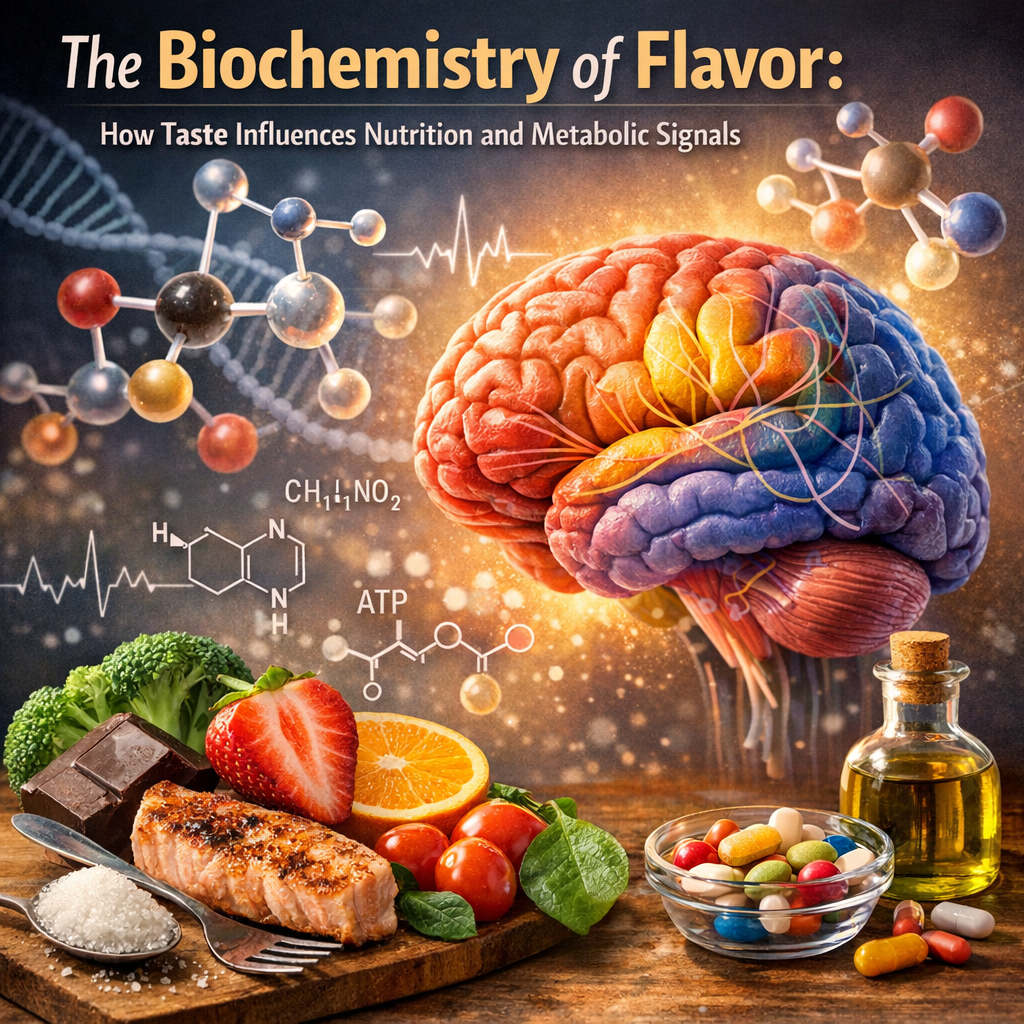
The Biochemistry of Flavor: How Taste Influences Nutrition and Metabolic Signals
Introduction
In the vast tapestry of dietary habits and traditions, the concept of flavor stands as a pivotal player that influences not only our culinary preferences but also our nutritional intake and metabolic processes. While *taste* is a sensory experience, it goes beyond mere enjoyment, acting as a biochemical guide that influences our dietary choices and physiological responses.
The intricate relationship between taste and nutrition stems from evolutionary needs. Historically, humans relied on taste as an essential tool to identify food that is beneficial, toxic, or energy-dense. Sweetness often signals energy-rich carbohydrates, while bitterness can be a warning of potential toxins. This interplay of taste and survival is deeply embedded in our genetic coding and becomes even more complex when we consider modern nutritional science and the biochemical mechanisms that drive our taste preferences.
From a biochemical perspective, the taste is defined by the interaction of taste molecules with specific receptors on our tongue. These receptors send signals to our brain, forming our perception of flavor. However, this sensory experience also initiates a series of metabolic responses that affect digestion, nutrient absorption, and overall metabolism. The release of saliva and digestive enzymes in response to taste is a preliminary step that prepares the body for effective nutrient processing. Furthermore, certain flavors can trigger the release of hormones like insulin, which plays a crucial role in glucose metabolism.
Understanding the relationship between taste and metabolic signals offers insightful revelations in the realm of nutrition and dietary planning. As consumers become more health-conscious and gravitate towards natural, homeopathic, and herbal treatments, the role of taste becomes even more significant, serving as a natural guide that aligns nutritional intake with bodily needs.
In the quest for optimal health, recognizing how taste influences our dietary choices and metabolic reactions can empower more informed nutritional decisions, making the biochemistry of flavor an essential topic for exploration.
Features
In recent years, scientific research has delved into the biochemistry of flavor, unveiling the complex interplay between taste perception and metabolic responses. A pivotal study published in the journal [*Nature*](https://www.nature.com/) underscored the discovery of taste receptors not just on the tongue but throughout the gastrointestinal tract. These receptors interact with dietary compounds to initiate metabolic pathways that go beyond traditional digestion, influencing hormone release and satiety signals.
One significant research from the Monell Chemical Senses Center explored how sweet and savory flavors, particularly umami, modulate hormonal influences affecting metabolism. This study highlighted that the consumption of certain taste-stimulating compounds could regulate the secretion of insulin and glucagon, dictating how our bodies process sugars and maintain energy levels. Such findings are instrumental in devising dietary strategies for managing conditions like diabetes and obesity, where metabolic control is pivotal.
Additionally, a study in the [*American Journal of Clinical Nutrition*](https://academic.oup.com/ajcn) pointed out the correlations between flavor intensity and nutrient perception, noting that robust flavors enhance digestive efficacy and nutrient absorption. These findings support the notion that flavors derived from natural, unprocessed foods can improve the body’s metabolic efficiency compared to their bland, processed counterparts.
Furthermore, research shows that flavors can exert psychological influences affecting our metabolism via the gut-brain axis. The presence of appetizing tastes can stimulate reward centers in the brain, leading to the release of endorphins and serotonin, which are associated with reduced stress and improved metabolic function.
The burgeoning field of nutrigenomics—a discipline that explores how nutrition interacts with our genes—adds another layer to the conversation. It posits that genetic variations can influence individual taste perceptions, which in turn dictate dietary preferences and metabolic efficiencies. This bespoke approach to diet and metabolism takes into account the inherent biochemical individuality, advocating for personalized nutrition as a cornerstone of dietary success.
Conclusion
The dynamic relationship between taste, nutrition, and metabolic signals underscores the complexity and sophistication of human dietary behavior. Understanding the biochemistry of flavor empowers us to make food choices that not only satisfy our palates but also align with our body’s nutritional and metabolic requirements. As we move towards a more health-conscious society, integrating this knowledge of taste perception with natural, homeopathic, and herbal treatments can offer a holistic approach to well-being. By acknowledging the power of flavor, we open the doors to dietary practices that are not only enjoyable and sustainable but also deeply rooted in our physiological needs.
Incorporating natural flavors and tastes can be a step toward achieving optimal health, promoting better digestion, efficient nutrient absorption, and more balanced metabolic conditions. Ultimately, a deeper understanding of the biochemistry of flavor encourages us to embrace a nutrition paradigm that respects and leverages the complexity of human taste and metabolism.
Summary
The relationship between taste, nutrition, and metabolism is complex, influenced by evolutionary and genetic factors. Taste, driven by biochemical processes, affects dietary choices and initiates metabolic responses. Research highlights the presence of taste receptors in the gastrointestinal tract, influencing hormone release and nutrient processing. Sweet and savory flavors impact insulin and glucagon secretion, crucial for managing diabetes and obesity. Nutrigenomics explores genetic influences on taste and dietary preferences. Understanding these interactions can lead to personalized nutrition strategies, enhancing metabolic efficiency and overall health through conscious dietary choices and natural flavor incorporation.

Dominic E. is a passionate filmmaker navigating the exciting intersection of art and science. By day, he delves into the complexities of the human body as a full-time medical writer, meticulously translating intricate medical concepts into accessible and engaging narratives. By night, he explores the boundless realm of cinematic storytelling, crafting narratives that evoke emotion and challenge perspectives.
Film Student and Full-time Medical Writer for ContentVendor.com