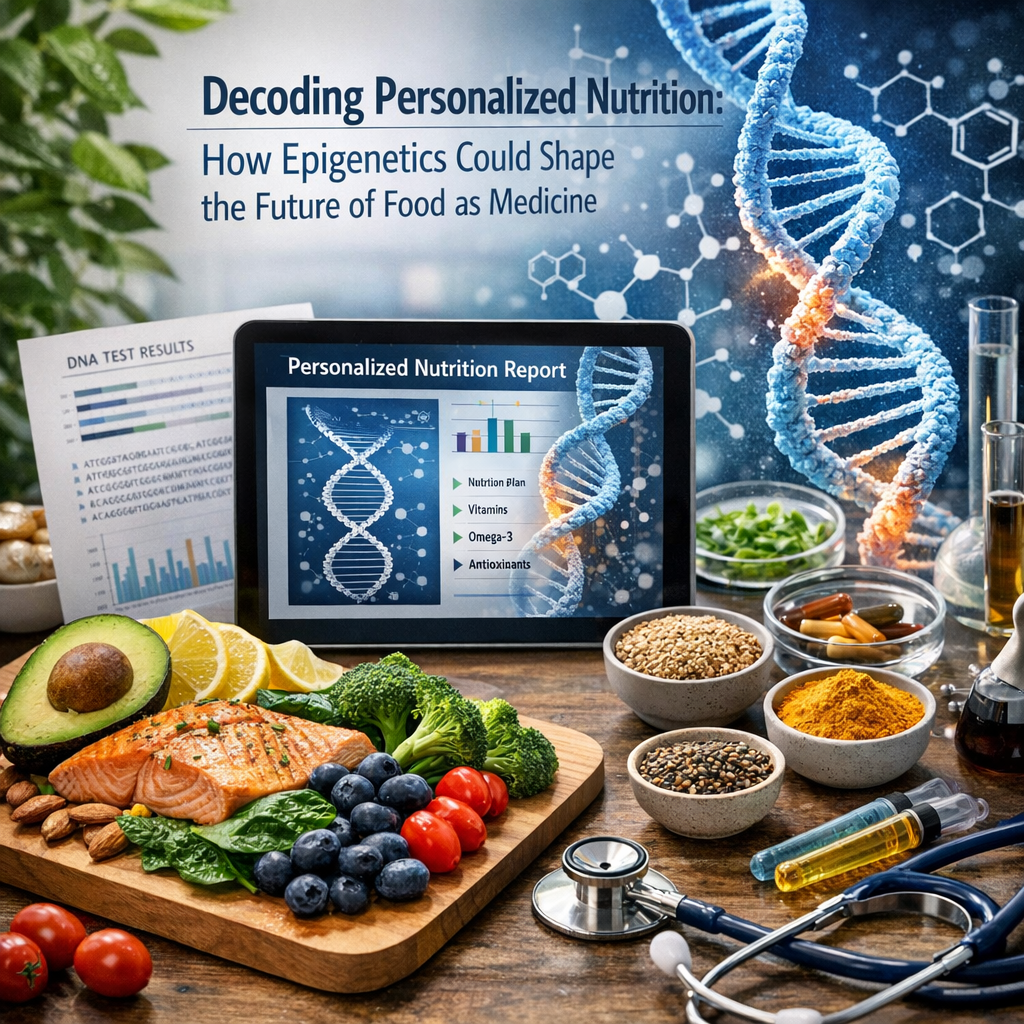
Decoding Personalized Nutrition: How Epigenetics Could Shape the Future of Food as Medicine
Introduction
In recent years, the concept of ”food as medicine” has gained traction, emphasizing the powerful role diet can play in maintaining optimal health and preventing chronic diseases. This integrative approach to health suggests that we can manage and even prevent certain conditions by tailoring our diets to our unique genetic makeup. One of the most exciting fields in this realm is the study of epigenetics—how our behaviors and environment can change the way our genes work. Personalized nutrition, powered by insights from epigenetics, promises a future where food can be specifically tailored to individual genetic profiles, thus revolutionizing healthcare and nutrition.
Epigenetics refers to heritable changes in gene expression that don’t involve alterations to the DNA sequence itself. Essentially, it suggests that while your genes provide a blueprint for your body, environmental factors like diet, stress, and exposure to toxins can influence which genes get “turned on” or “turned off.” This groundbreaking science indicates that each individual’s nutritional needs are as unique as their DNA, offering a more personalized approach to dietary recommendations and health optimization.
The implications of epigenetics in nutrition are profound. Imagine a world where instead of generic dietary guidelines, nutritionists and dietitians use a person’s genetic information to recommend foods that will be most beneficial for their health. For example, a person with a genetic predisposition to high cholesterol might receive personalized advice to consume foods that can help modulate their cholesterol levels more effectively than standard dietary guidelines.
Moreover, understanding the epigenetic influences of food could identify which dietary patterns might optimize gene expression for disease prevention. This shift towards personalized dietary solutions could redefine preventive medicine, moving away from a one-size-fits-all model to one that is customized, precise, and notably more effective.
As research progresses, the integration of epigenetics into nutrition not only finds applications in individual healthcare but also inspires a broader social movement towards better eating habits and preventive health strategies. The marriage of evolutionary science and nutritional studies presents the opportunity to address some of the most pressing health concerns of our time with more precision and efficacy than ever before.
Features
Research into epigenetics and personalized nutrition is burgeoning, with many studies offering promising insights. Recent studies in the field emphasize the relationship between diet and gene expression, underscoring the potential of tailored nutrition in promoting health and longevity.
One significant study conducted by the National Institutes of Health (NIH) explored how dietary choices impact gene expression and influence the risk of diseases like obesity and diabetes. The research highlights that nutrients such as fatty acids, vitamins, and trace elements can induce epigenetic modifications, thus affecting metabolic pathways and disease susceptibility. [NIH Study on Dietary Impact on Gene Expression](https://www.nih.gov).
Further supporting this is a comprehensive study published in the journal “Nature,” which has confirmed that epigenetic markers are indeed responsive to dietary interventions. The study involved an analysis of the Mediterranean diet and its role in mitigating genome-wide methylation processes associated with inflammatory markers in healthy subjects. The results suggested that specific components of this diet could change methylation status, showcasing how dietary adjustments can positively modulate gene activity and reduce inflammation. [Nature Study on Diet and Epigenetics](https://www.nature.com).
Another study by the Harvard T.H. Chan School of Public Health demonstrates the potential of personalized nutrition in weight management. Here, the research focused on the impact of various macronutrient types in low-carb and low-fat diets, further validating that individual genetic makeup significantly influences the effectiveness of dietary interventions. The findings suggest that personalized dietary prescriptions based on genetic profiling could yield more successful outcomes in weight management strategies compared to generic dietary frameworks. [Harvard Nutrition Study](https://www.hsph.harvard.edu).
Collectively, these studies underscore the vast possibilities that personalized nutrition, guided by epigenetic understanding, holds for future dietary recommendations and health outcomes. As scientific methodologies and health technologies advance, the intertwining of genetics and dietetic science is paving the way for novel, more individualized approaches to improve public health.
Conclusion
The field of personalized nutrition steered by epigenetic insights represents a paradigm shift in the way we approach diet and health. By leveraging the power of our genetic blueprint, there is vast potential to transform food from a mere source of sustenance to a proactive tool for health management. As the intersection of nutrition and genomics continues to develop, the promise of precision nutrition could revolutionize our understanding and interaction with food, allowing us to tailor individual lifestyles for optimal health outcomes.
The alignment of epigenetic knowledge with nutritional practices not only enhances our ability to prevent and manage diseases but also promotes a broader understanding of how we nourish our bodies. By moving away from generalized dietary suggestions and embracing a more personalized approach, we have the opportunity to achieve unprecedented health heights. This exciting frontier in nutritional science holds the potential to redefine food as medicine, making it a critical cornerstone of holistic healthcare and wellness strategies in the 21st century.
Concise Summary:
Personalized nutrition, informed by the burgeoning field of epigenetics, suggests that our diet can be tailored to our unique genetic profiles for optimal health outcomes. Epigenetics explores how environmental factors such as diet can influence gene expression without altering DNA itself. This approach holds promise for more effective health strategies, shifting from general dietary advice to personalized recommendations. Research underscores the potential of nutrients to affect gene activity linked to diseases. As genetic understanding advances, so does the integration of genetic data with nutrition, reshaping food into a customized tool for preventive health.

Dominic E. is a passionate filmmaker navigating the exciting intersection of art and science. By day, he delves into the complexities of the human body as a full-time medical writer, meticulously translating intricate medical concepts into accessible and engaging narratives. By night, he explores the boundless realm of cinematic storytelling, crafting narratives that evoke emotion and challenge perspectives.
Film Student and Full-time Medical Writer for ContentVendor.com