Unlocking the Future of Clinical Nutrition: How AI is Revolutionizing Food as Medicine
Introduction
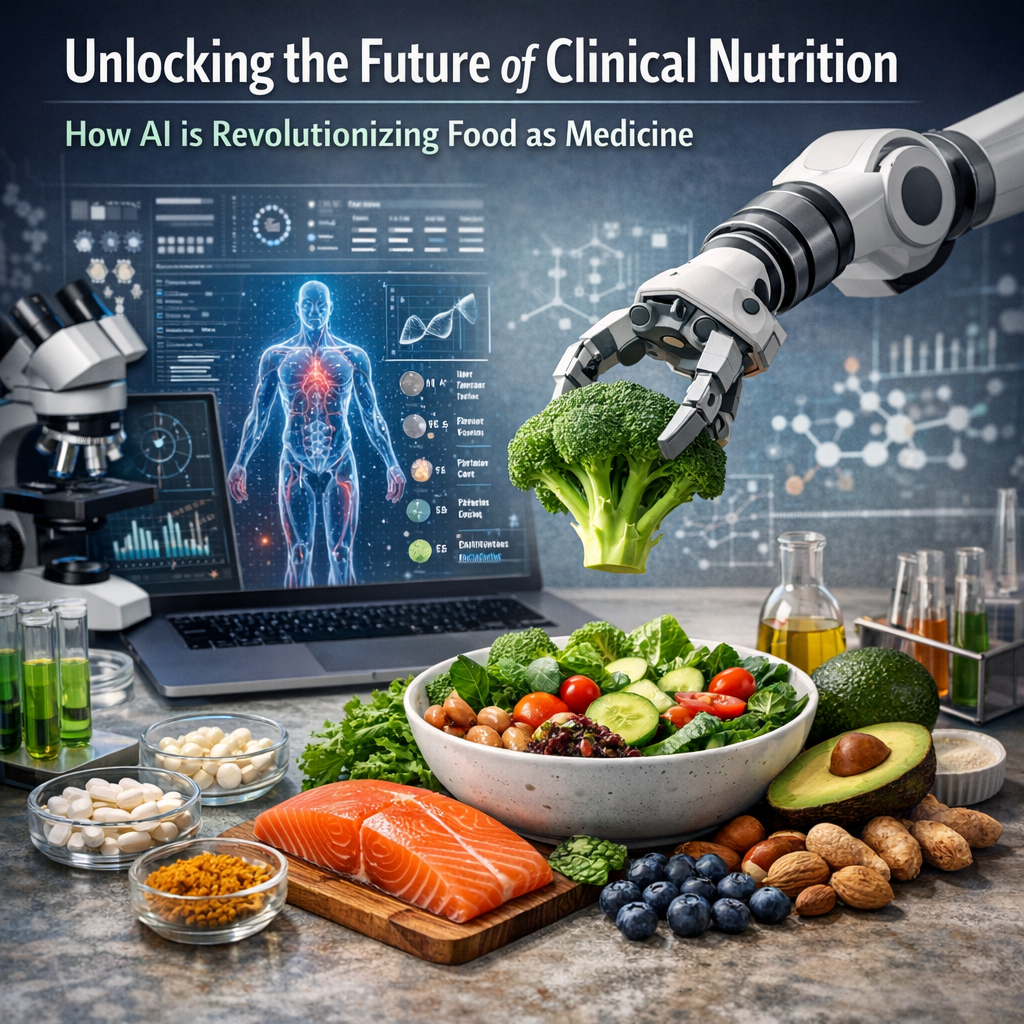
In recent years, the concept of ”food as medicine” has gained significant traction, signifying a growing recognition of the role that diet and nutrition play in maintaining health and preventing disease. At the intersection of technology and nutrition, artificial intelligence (AI) is poised to revolutionize this landscape, offering unprecedented opportunities to tailor dietary recommendations and treatments to individual needs. As healthcare moves away from generalized treatments towards personalized medicine, the integration of AI into clinical nutrition represents a promising frontier.
AI’s potential in clinical nutrition is multifaceted, encompassing diagnostics, dietary interventions, and even preventive care. Advanced algorithms can analyze vast datasets to identify correlations between nutritional intake and health outcomes that might elude traditional research methods. This ability to process and interpret complex datasets allows for the development of highly customized nutritional plans, paving the way for more effective interventions.
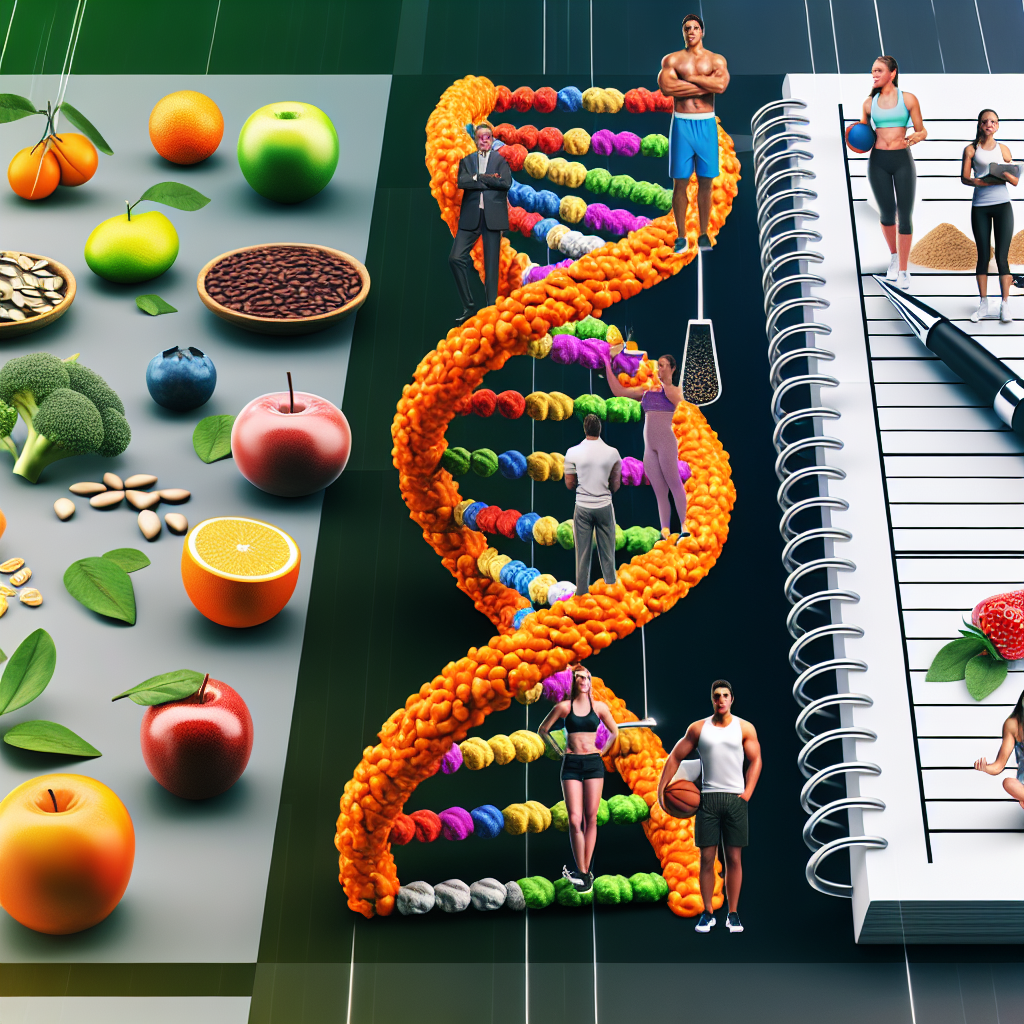
Across the globe, researchers are employing AI to uncover the intricate relationships between genetics, lifestyle, and nutrition. By leveraging machine learning and other AI technologies, scientists can predict how individual responses to various foods and nutrients might differ, ultimately enabling precision nutrition. This approach not only allows for the treatment of chronic diseases but also fosters the prevention of conditions such as obesity, diabetes, and cardiovascular diseases through personalized dietary regimes.
Additionally, AI’s impact on clinical nutrition isn’t limited to just individual dietary recommendations. The technology is also transforming food production and supply chains, ensuring that high-quality, nutritionally beneficial foods are more accessible. From hydroponic farming solutions that maximize nutrient content to AI-driven logistics that optimize freshness, technology ensures that the healthiest options reach consumers swiftly and efficiently.
The convergence of AI and clinical nutrition holds transformative potential, promising a future where dietary recommendations are not only personalized but also dynamic, evolving in real-time as new research emerges. As the field continues to evolve, the collaboration between nutritionists, technologists, and healthcare professionals will be crucial in harnessing AI’s capabilities to benefit human health on a global scale.
Features
The application of AI in food as medicine is backed by a growing body of professional and medical studies. One significant area of research is the use of AI to predict how diet affects an individual’s metabolism. A study published in [*Cell* by Zeevi et.al.](https://www.cell.com/cell/fulltext/S0092-8674(15)01481-6) demonstrated how machine-learning algorithms could predict personal blood glucose responses following meals with remarkable accuracy based on individual dietary histories, gut microbiota profiles, and lifestyle data.
Moreover, AI’s role in understanding the genetic underpinnings of nutritional needs has been explored in research led by the [Center for Precision Health Data Sciences](https://www.ncbi.nlm.nih.gov/pmc/articles/PMC7579231/). Their findings indicate that AI can analyze genetic data alongside dietary intake to forecast health outcomes, effectively guiding nutritional interventions. This heralds a shift towards precision nutrition, where AI not only aids in disease management but also offers preventive strategies based on individual genetic predispositions.
Another area of innovation is the application of AI in nutrient profiling systems. Studies have shown that AI can process vast amounts of data to evaluate food’s nutritional quality, assisting consumers, clinicians, and policymakers in understanding and improving diet-related behaviors. For example, the Nutri-Score algorithm, enhanced by AI technologies, offers an easy-to-understand guide on food products’ nutritional value, significantly aiding in healthier food choices [source](https://academic.oup.com/eurpub/article/26/suppl_1/ckw173.351/2442578).
Finally, the integration of AI in clinical nutrition reaches beyond individual health to provide insights into public health strategies. A notable research project by [the Global Open Data for Agriculture & Nutrition (GODAN)](https://www.godan.info/) revealed how AI could be leveraged to address undernutrition and food security globally, implementing data-driven interventions that ensure equitable food distribution, tailored to meet nutritional requirements on a community scale. Such applications underscore AI’s potential in transforming clinical nutrition from a reactive to a proactive, preventive paradigm.
Conclusion
The transformative power of AI in clinical nutrition holds promise for a future where health and wellness are personalized, predictive, and preventive. By enabling precision nutrition, AI not only enhances individual health outcomes but also addresses broader public health challenges, ensuring access to nutritionally rich foods and optimizing personal health through tailored dietary interventions.
AI’s journey in transforming clinical nutrition is just beginning, with new developments continually expanding its potential. However, successful implementation will require collaboration across healthcare and technology sectors, adherence to ethical standards, and an unwavering commitment to inclusive health solutions. As AI continues to integrate into the realm of clinical nutrition, it lays the groundwork for a truly personalized healthcare system where food is not just sustenance but a pivotal component of medical treatment and disease prevention.
The convergence of AI and clinical nutrition represents an exciting leap forward, offering innovative solutions to longstanding nutritional challenges and paving the way for a healthier, more balanced future for individuals and communities worldwide.
### Concise Summary
The application of AI in clinical nutrition is revolutionizing the field by providing personalized dietary recommendations based on vast datasets, enhancing individual health outcomes, and addressing global public health challenges. By leveraging AI, researchers can identify complex relationships between genetics, diet, and lifestyle, enabling precision nutrition to treat and prevent chronic diseases. AI-driven innovations also optimize food production and distribution, ensuring access to high-quality nutrition. Collaboration across sectors and adherence to ethical standards are essential as AI continues to enhance personalized and preventive healthcare.

Dominic E. is a passionate filmmaker navigating the exciting intersection of art and science. By day, he delves into the complexities of the human body as a full-time medical writer, meticulously translating intricate medical concepts into accessible and engaging narratives. By night, he explores the boundless realm of cinematic storytelling, crafting narratives that evoke emotion and challenge perspectives.
Film Student and Full-time Medical Writer for ContentVendor.com