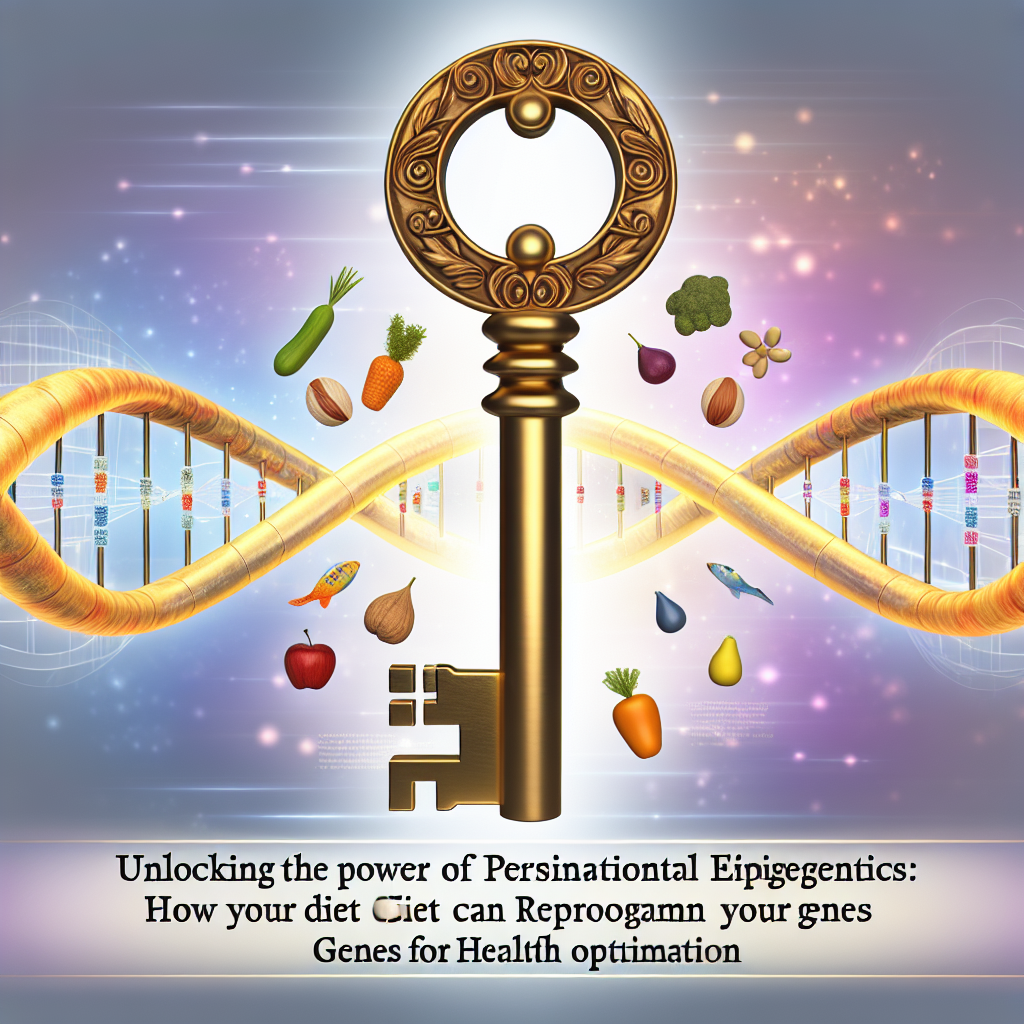
Unlocking the Power of Personalized Nutritional Epigenetics: How Your Diet Can Reprogram Your Genes for Health Optimization
Introduction
In the ever-evolving realm of **health and wellness**, **nutritional epigenetics** is emerging as a transformative pillar. Although the concept might seem like science fiction, it’s a real, tangible area of study that’s proving pivotal in understanding how our **diet** can dramatically influence our **gene expression**. At its core, epigenetics is the study of changes in gene function that do not involve alterations to the underlying **DNA sequence**. This fascinating field unveils how lifestyle factors like diet, stress, and environmental exposure can switch genes on or off.
**Nutritional epigenetics** shines a spotlight on how **foods and nutrients** can alter the way our genes express themselves, essentially reprogramming our genetic code in response to what we eat. The implications of these findings are vast, offering a road map to potentially mitigate the risks of chronic diseases, enhance longevity, and improve overall health outcomes through personalized nutrition plans tailored to an individual’s unique genetic makeup.
Imagine influencing your predisposition to **heart disease**, **diabetes**, or other **chronic conditions** simply by adjusting your diet. With personalized nutritional epigenetics, we potentially hold the keys to unlocking a healthier and more fulfilling life. As we continue to decode the human genome and unravel the complexities of epigenetics, crafting individualized diet plans that cater to our distinctive genetic blueprints is not just a possibility but a new frontier in health optimization.
As we delve deeper into this topic, we’ll explore recent research findings highlighting the interplay between **nutrition** and **gene expression**. Our dietary choices, once influenced only by cultural and personal preferences, are now big players in health science, proving that nature and nurture are far from mutually exclusive. Join us as we explore how understanding and leveraging this interplay can enable you to take control of your health destiny, optimizing your wellbeing in a way that aligns with your unique biological makeup.
Features
Recent studies have illuminated the powerful link between diet and genetic expression, affirming that what we eat can have a direct bearing on our DNA. One pivotal study published in Nature Reviews Genetics underscores the role of **bioactive food components** in modifying **epigenetic markers**, which can impact gene expression. The research highlights that nutrients such as **folate**, **methyl donors**, and **polyphenols** are instrumental in regulating DNA methylation—a key epigenetic mechanism. By altering the methylation status of gene promoters, these nutrients can effectively turn genes on or off, influencing health outcomes in profound ways.
Another significant study in The American Journal of Clinical Nutrition investigates the influence of diet on **histone modification**. Histones are proteins around which DNA wraps, and their chemical modification can impact gene accessibility and expression. The study suggests that **short-chain fatty acids** and **flavonoids** play crucial roles in the modulation of histone acetylation, promoting a gene expression profile associated with reduced inflammation and enhanced metabolic regulation.
Moreover, a groundbreaking investigation involving the **Mediterranean diet**, published in Nature Communications, tracked its impact on epigenetic changes over time. Participants who adhered to this diet, rich in **olive oil**, **nuts**, and **fish**, exhibited beneficial shifts in gene expression related to disease resistance and longevity. The findings bolster the argument for dietary modulation as a preventive healthcare measure.
These findings underscore the importance of integrating personalized nutritional approaches in medical practices. As our understanding of the human genome deepens, our ability to apply nutritional epigenetics in clinical settings increases. By aligning dietary recommendations with genetic predispositions, medical professionals can create bespoke health strategies that maximize genetic potential while minimizing disease risk.
Conclusion
The exploration of personalized nutritional epigenetics is catalyzing a paradigm shift in how we approach dieting and health optimization. By unraveling the interplay between diet and gene expression, we open the door to **personalized nutrition plans** that are not only preventative but also restorative. As we advance in decoding the human genome, daily application of this knowledge could transform public health, steering us away from a one-size-fits-all model towards tailored interventions that respect our genetic individuality.
Through comprehensive lifestyle adjustments that include mindful dietary choices, we can harness the power of epigenetics to promote wellbeing and longevity. While our journey into understanding this complex science is just beginning, it’s clear that nutritional epigenetics represents the future of health optimization—a future where our diet not only nourishes our body but also fine-tunes our genetic instruments to harmonize with health.
**Concise Summary**
Personalized nutritional epigenetics offers a groundbreaking approach to health, focusing on how diet influences gene expression without altering DNA sequences. Recent studies show nutrients like folate, polyphenols, and flavonoids impact epigenetic mechanisms, potentially mitigating risks of chronic diseases. Evidence suggests diets, such as the Mediterranean diet, optimize gene expression for disease resistance and longevity. As understanding grows, personalized nutrition plans are set to revolutionize public health by aligning dietary recommendations with genetic profiles, moving away from a one-size-fits-all model toward bespoke approaches that maximize health outcomes.

Dominic E. is a passionate filmmaker navigating the exciting intersection of art and science. By day, he delves into the complexities of the human body as a full-time medical writer, meticulously translating intricate medical concepts into accessible and engaging narratives. By night, he explores the boundless realm of cinematic storytelling, crafting narratives that evoke emotion and challenge perspectives.
Film Student and Full-time Medical Writer for ContentVendor.com