Phytochemical Diversity – Color-Based Eating Guide
Introduction
In the whirlwind of diet trends and health strategies, one timeless principle continues to gain traction: eating a rainbow of fruits and vegetables supports optimal health. Beyond just vibrant aesthetics, the colors in plant-based foods reflect their rich content of phytochemicals—bioactive compounds that strengthen the immune system, reduce inflammation, combat oxidative stress, and may help prevent chronic diseases.
Phytochemicals, also called phytonutrients, are natural compounds produced by plants that lend color, flavor, and disease resistance. Though not essential for survival like vitamins or minerals, these compounds—such as flavonoids, carotenoids, polyphenols, anthocyanins, and glucosinolates—have strong health-promoting properties.
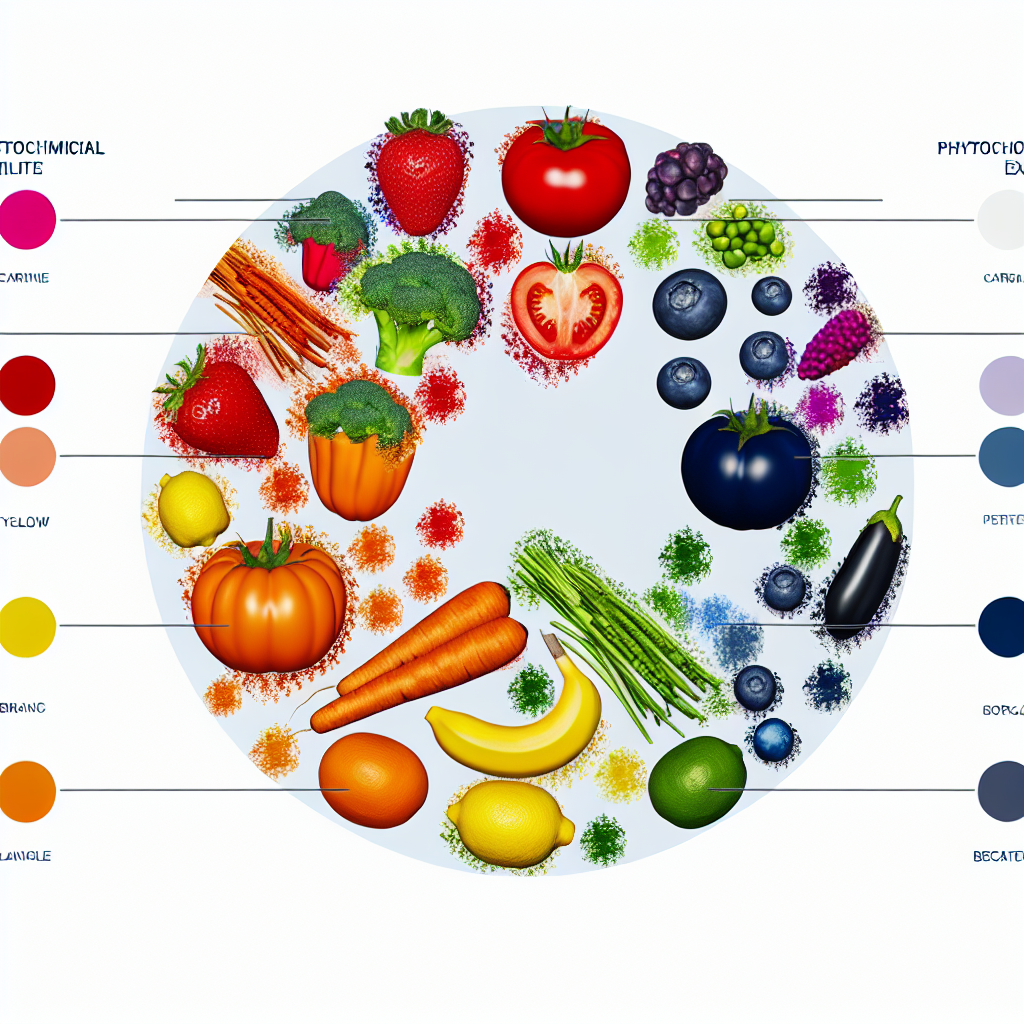
The concept of color-based eating focuses on filling your meals with a diverse spectrum—red, orange, yellow, green, blue/purple, and even white/brown. Each hue reflects a unique phytochemical profile, offering specific health benefits. For instance, the red in tomatoes (lycopene) can support heart health and reduce cancer risk, while the green in spinach (chlorophyll and isothiocyanates) supports detoxification and immune function.
No single plant or color group offers a complete range of phytochemicals. A diet abundant in color ensures broader protection for your body. Especially for those exploring natural remedies, herbal approaches, and holistic nutrition, this method offers a grounded and visually guided tool to promote well-being without relying solely on synthetic supplements or medications.
Ultimately, by embracing a diverse, plant-rich lifestyle, individuals can support the body’s natural healing potential. Each naturally colorful food nourishes specific body systems, aligning with the core belief in nutritional harmony, making food not just fuel—but medicine.
Features and Medical Studies Supporting Phytochemical Diversity
Scientific attention toward phytochemicals has grown substantially due to their proven role in reducing the risk of chronic diseases. Numerous studies show that a phytochemical-rich diet can help prevent illnesses like heart disease, diabetes, cancer, and neurodegenerative disorders.
A landmark 2004 study in the Journal of Nutrition by Liu et al. emphasized the synergistic effects of phytochemicals found in whole foods over isolated antioxidant supplements, highlighting how nutrients work better together in their natural context. [Read the study here](https://academic.oup.com/jn/article/134/12/3479S/4688821)
Red foods, including tomatoes and watermelon, are rich in lycopene, a carotenoid studied for its potential to lower prostate cancer risk. A review in Cancer Letters (2008) found that lycopene’s antioxidant and anti-inflammatory properties slow prostate tumor progression. [Read more here](https://www.sciencedirect.com/science/article/abs/pii/S0304383508006915)
Orange and yellow foods like carrots, pumpkins, and citrus fruits provide beta-carotene, flavonoids, and hesperidin. These support eye health, boost immunity, and lower inflammation. The Age-Related Eye Disease Study (AREDS) by the National Eye Institute concluded that beta-carotene, along with zinc and other nutrients, significantly reduces the risk of age-associated vision loss. [View the study](https://pubmed.ncbi.nlm.nih.gov/11594943/)
Green vegetables such as kale, broccoli, and spinach are loaded with glucosinolates, chlorophyll, and lutein. These compounds support detoxification processes and inhibit cancer development by aiding the body’s phase I and II enzyme detox systems. [See the research](https://www.frontiersin.org/articles/10.3389/fnut.2016.00019/full)
Blue and purple foods, including blueberries and eggplants, contain anthocyanins, which support memory, mood, and cardiovascular health. A 2012 study in Annals of Neurology showed that women with higher berry intake experienced delayed brain aging by up to 2.5 years. [Read the article](https://onlinelibrary.wiley.com/doi/full/10.1002/ana.23594)
White and brown plant foods, such as garlic, onions, and mushrooms, contain compounds like allicin and polyphenols. These have antimicrobial, anti-inflammatory, and cholesterol-lowering effects. A 2005 study in the Journal of Medicinal Food found that garlic effectively reduced cholesterol levels and blood pressure. [See the study](https://www.liebertpub.com/doi/10.1089/jmf.2005.8.377)
The science is clear: consuming a variety of colorful, unprocessed plant foods safeguards the body across multiple systems. This approach aligns well with natural medicine principles—working with the body’s design rather than overriding its signals with synthetic interventions.
Conclusion
Eating a colorful diet isn’t just visually satisfying—it’s a practical way to tap into the power of phytochemical diversity. Every natural color on your plate acts as a code from nature, offering compounds that renew and protect our health.
This strategic approach to nutrition helps reduce inflammation, enhance immune function, aid detoxification, and even clarify the mind. Instead of depending on costly supplements or experimental cures, color-based eating lays the groundwork for everyday wellness. For individuals pursuing natural health strategies, it introduces a robust, accessible way to boost vitality through food alone.
Remember: the more varied the color on your plate, the more extensive your nutritional armor becomes. Nature has provided the tools—colored fruits and vegetables—to build lifelong health from the inside out.
Summary
Eating a colorful variety of fruits and vegetables introduces the body to a wide spectrum of healing phytochemicals, such as flavonoids, carotenoids, and anthocyanins. This holistic method—known as color-based eating—supports immune function, reduces inflammation, prevents oxidative stress, and combats chronic disease. Medical studies show that these naturally occurring compounds, found in foods like tomatoes, blueberries, spinach, and garlic, offer powerful protection not achieved through supplements alone. Aligning with the principles of natural healing, eating the rainbow provides a practical, visually guided path to sustainable wellness, helping the body heal and thrive without pharmaceutical reliance.
References
– Liu, RH. (2004). Potential synergy of phytochemicals in cancer prevention: mechanism of action. Journal of Nutrition. [Read here](https://academic.oup.com/jn/article/134/12/3479S/4688821)
– Chen, L., Stacewicz Sapuntzakis, M., & Crozier, A. (2008). Lycopene and Risk of Cancer: A Review. Cancer Letters. [Link](https://www.sciencedirect.com/science/article/abs/pii/S0304383508006915)
– Age-Related Eye Disease Study Research Group. (2001). Nutrition and Age-Related Macular Degeneration. Archives of Ophthalmology. [Link](https://pubmed.ncbi.nlm.nih.gov/11594943/)
– Higdon, JV. & Delage, B. (2016). Cruciferous Vegetables and Human Cancer Risk. Frontiers in Nutrition. [Link](https://www.frontiersin.org/articles/10.3389/fnut.2016.00019/full)
– Devore EE, et al. (2012). Berries and Cognitive Decline. Annals of Neurology. [Link](https://onlinelibrary.wiley.com/doi/full/10.1002/ana.23594)
– Rahman, K. (2005). Garlic’s Effects on Cholesterol and Physiology. Journal of Medicinal Food. [Link](https://www.liebertpub.com/doi/10.1089/jmf.2005.8.377)

Dominic E. is a passionate filmmaker navigating the exciting intersection of art and science. By day, he delves into the complexities of the human body as a full-time medical writer, meticulously translating intricate medical concepts into accessible and engaging narratives. By night, he explores the boundless realm of cinematic storytelling, crafting narratives that evoke emotion and challenge perspectives.
Film Student and Full-time Medical Writer for ContentVendor.com