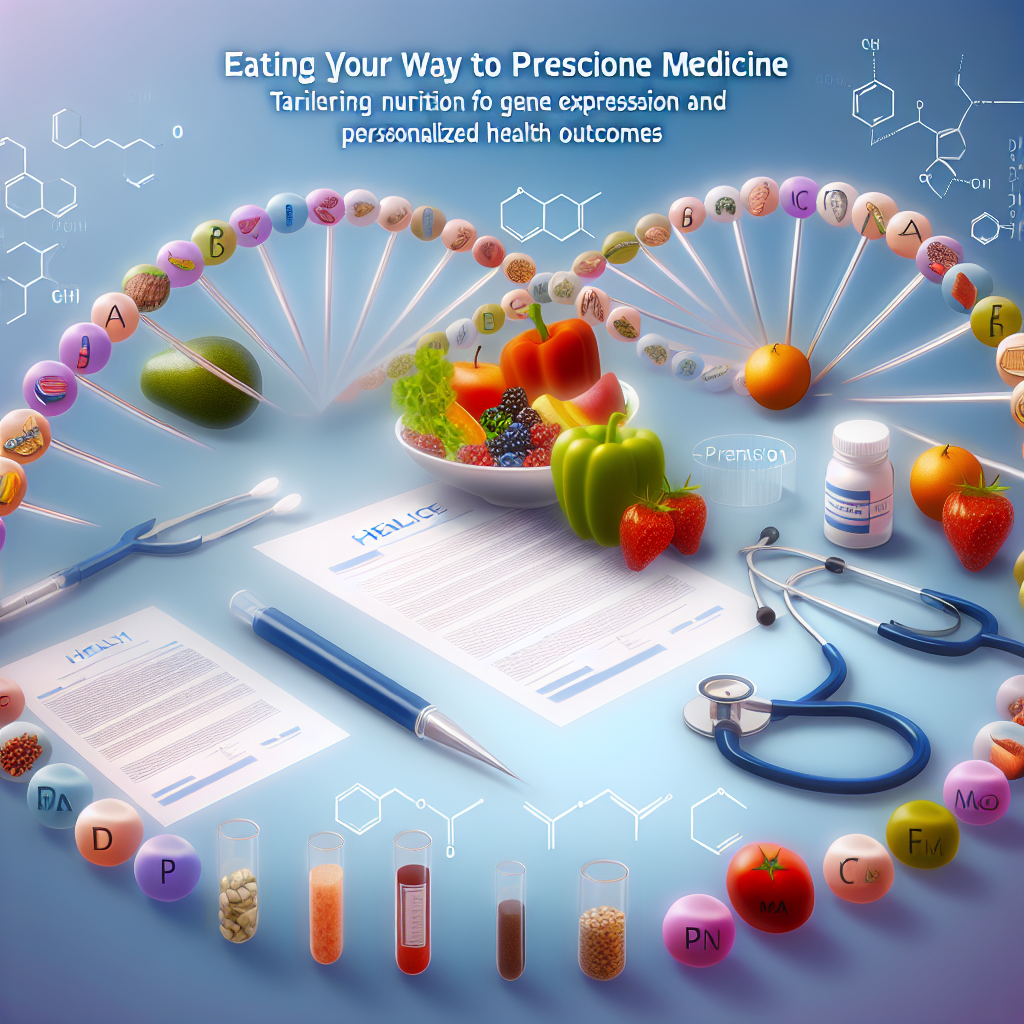
Eating Your Way to Precision Medicine: Tailoring Nutrition for Gene Expression and Personalized Health Outcomes
Introduction
In the modern era, the quest for individualized health solutions is more palpable than ever before. With the rise of precision medicine, there is a growing focus on tailoring healthcare based on an individual’s genetic makeup, lifestyle, and environmental factors. One of the most fascinating developments in this field is the exploration of how nutrition can influence gene expression, ultimately impacting health outcomes on a personal level.
The concept of precision nutrition ties into the broader umbrella of precision medicine, emphasizing that “one size fits all” is not effective for dietary recommendations. At the core of this approach is the understanding that each person’s body responds differently to food based on their genetic code. Nutrients from food can turn certain genes on or off, a field of study known as nutrigenomics.
By delving into an individual’s genomic information, healthcare providers can determine specific nutritional plans that cater to personal health needs, potentially preventing adverse health issues before they manifest. For instance, a person predisposed to high cholesterol may uniquely benefit from a Mediterranean diet, compared to another whose genes are inclined toward inflammatory conditions, who might thrive on a diet focused on omega-3 fatty acids and antioxidants.
Moreover, this approach is not merely theoretical. Research continues to underline the promising changes at the molecular level driven by personalized nutritional adjustments. The possibilities are expansive, ranging from the potential enhancement of mental health outcomes to optimization of physical performance, and even to prolonged healthspan and longevity.
As we stand at the frontier of this nutritional and genetic revolution, it is essential to explore not only the cutting-edge science involved but also the practical steps individuals can take to integrate these advancements into daily living. By understanding and applying the principles of precision medicine through personalized nutrition, we can empower health-conscious individuals to make informed decisions that align with their unique genetic profiles and lifestyles.
Features
Numerous studies underpin the burgeoning field of precision nutrition, emphasizing its potential to revolutionize healthcare outcomes through tailored dietary interventions. A pivotal study by the International Consortium for Personalized Medicine (ICPerMed) highlights the role of nutrigenomics—how diet influences gene expression—and its profound implications for personalized health interventions.
One landmark study published in the journal *Nature* explored the complex interactions between nutrients and gene expression. Researchers discovered that certain microRNAs are influenced by dietary components, which can further regulate gene expression linked to inflammatory diseases and metabolic disorders. This finding demonstrates the molecular basis of how personalized nutrition can better manage and potentially prevent these conditions.
Another study focusing on cardiovascular health found that tailored dietary recommendations based on genetic profiling improved lipid profiles and reduced markers of inflammation in participants, compared to standard dietary guidelines (American Journal of Clinical Nutrition, 2020). These results indicate that personalized dietary advice based on genetic information can lead to significant and favorable health outcomes.
Precision nutrition’s potential to impact metabolic health is echoed in research conducted by the National Institutes of Health (NIH). Their studies have shown that personalized dietary interventions can effectively manage type 2 diabetes by leveraging an individual’s unique genomic makeup. Patients who followed a genotype-based dietary plan had better glycemic control and insulin sensitivity compared to those on standard diabetic diets (NIH, 2021).
Integrating genomic data into nutritional recommendations is not without its challenges. The complexity of genetic interactions with environmental and lifestyle factors means ongoing research and collaboration across scientific disciplines are crucial. However, with rapid advancements in genetic testing and data analysis technologies, the application of precision nutrition is becoming increasingly feasible and accessible.
Conclusion
Precision nutrition embodies a paradigm shift in healthcare, moving from generalized dietary guidelines to personalized health interventions. As we’ve explored, this sophisticated approach leverages the understanding of nutrigenomics to influence gene expression, offering individualized care that aligns with genetic predispositions. While the current landscape is promising, continued research is necessary to fully harness its potential and make these interventions widely available. Unleashing the power of precision nutrition offers a path to more effective prevention strategies and optimized health outcomes, allowing individuals to manage and potentially improve their health proactively. Embracing this precision medicine approach promises a future where dietary choices align intricately with our genetic blueprint, fostering a healthier, more personalized world.
Concise Summary
Precision nutrition is a transformative approach to healthcare that tailors dietary recommendations based on an individual’s genetic makeup and lifestyle, influencing gene expression and health outcomes. By understanding and applying nutrigenomics, healthcare providers can design personalized nutritional plans, preventing potential health issues and promoting optimized health, longevity, mental well-being, and physical performance. Landmark studies illustrate the benefits of this approach in managing inflammatory diseases, metabolic disorders, and cardiovascular health. While challenges in integrating genomic data persist, rapid advances in genetic testing and data analysis pave the way for accessible personalized nutrition, ultimately aligning dietary choices with our genetic blueprint.

Dominic E. is a passionate filmmaker navigating the exciting intersection of art and science. By day, he delves into the complexities of the human body as a full-time medical writer, meticulously translating intricate medical concepts into accessible and engaging narratives. By night, he explores the boundless realm of cinematic storytelling, crafting narratives that evoke emotion and challenge perspectives.
Film Student and Full-time Medical Writer for ContentVendor.com