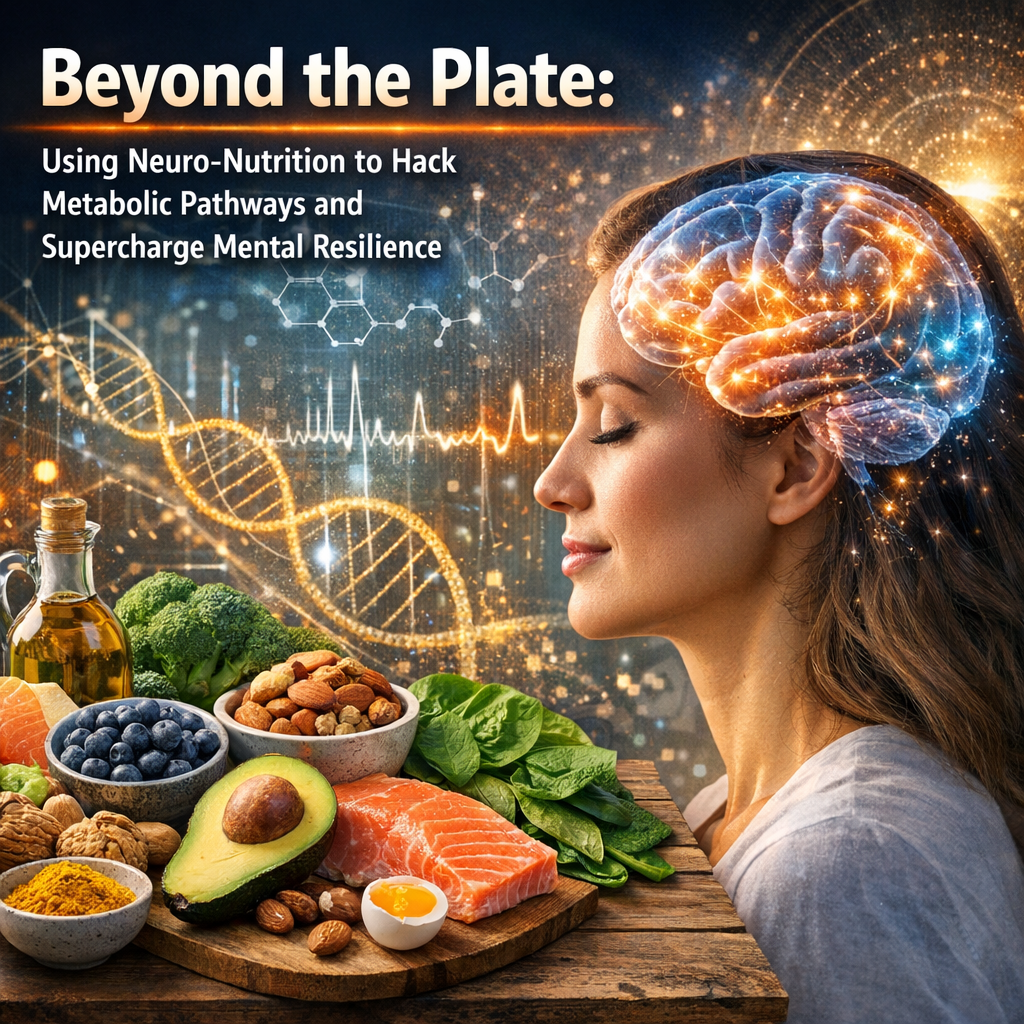
Beyond the Plate: Using Neuro-Nutrition to Hack Metabolic Pathways and Supercharge Mental Resilience
Introduction
In today’s fast-paced, hyper-connected world, maintaining mental resilience is as vital as physical health. Many factors, including dietary choices, play a crucial role in optimizing brain function, psychological well-being, and overall mental health. Enter neuro-nutrition—a field dedicated to understanding and optimizing how the nutrients we consume influence cognitive processes and emotional stability.
Neuro-nutrition is a science at the intersection of nutrition, neurology, and psychology. It explores the ways in which foods can influence the production of neurotransmitters, the chemicals that pass signals through the brain and regulate mood and cognition. Instead of focusing solely on the nutritional value of food, neuro-nutrition emphasizes the biochemical impact of nutrients on mental health and performance.
Hacking metabolic pathways through mindful neuro-nutrition can offer a practical, natural approach to boosting mental resilience. These pathways are the series of chemical reactions within a cell, fueled by the nutrients we consume, which are essential for maintaining healthy brain function. Some pathways are related to energy production, while others affect the synthesis and regulation of neurotransmitters.
One key factor is understanding how particular nutrients impact these pathways. Omega-3 fatty acids, for example, are renowned for their role in supporting brain health. They contribute to strengthening the synaptic membranes and play a role in synaptic plasticity, which is crucial for learning and memory. Similarly, amino acids like tryptophan and tyrosine are precursors to serotonin and dopamine, respectively—neurotransmitters that play essential roles in mood regulation and mental clarity.
In this exploration of neuro-nutrition, we will delve into scientific insights and identify specific dietary choices and supplements that can enhance cognitive function and fortify mental resilience. By understanding how to fuel our brains effectively, we can pave a pathway toward improved mental health, focus, and emotional balance.
Features
Emerging research underscores the profound impact of diet on brain health and resilience. A pivotal study published in the journal Frontiers in Aging Neuroscience highlighted how omega-3 fatty acids support cognitive function and slow brain aging. Their anti-inflammatory properties help modulate neuroinflammation, which is linked to mood disorders and cognitive decline. By including foods rich in omega-3s, like fatty fish, chia seeds, and walnuts, individuals can fortify the brain’s communication networks ([source](https://www.frontiersin.org/articles/10.3389/fnagi.2020.00234/full)).
In addition to omega-3s, polyphenols, a category of antioxidants found in berries, dark chocolate, and certain teas, have been studied for their neuroprotective effects. A study in Nutrients found that polyphenols enhance cognitive function by reducing oxidative stress and improving cerebrovascular function, ensuring oxygen and nutrient-rich blood reaches the brain ([source](https://www.ncbi.nlm.nih.gov/pmc/articles/PMC6315627/)).
Neuro-nutrition extends beyond macro and micronutrients to embrace nootropics, natural substances that improve cognitive function. A comprehensive review in Evidence-Based Complementary and Alternative Medicine discussed how specific nootropics like Ginkgo biloba and Rhodiola rosea can enhance mental performance, reduce fatigue, and improve stress response ([source](https://www.ncbi.nlm.nih.gov/pmc/articles/PMC3136123/)).
Moreover, gut health has an emerging role in mental resilience, highlighting the gut-brain axis. A groundbreaking study published in Psychological Medicine emphasized how probiotics might influence mood and cognitive function by modulating this axis, reducing symptoms of depression and anxiety ([source](https://www.cambridge.org/core/journals/psychological-medicine/article/abs/gut-brain-axis-role-of-microbiota-in-mood-and-cognitive-research/F5AC10D665284C40EF1CC94567A857C)).
The evolving understanding of neuro-nutrition emphasizes an integrative approach to diet, optimizing both brain health and mental well-being through carefully chosen natural remedies and lifestyle adjustments.
Conclusion
Incorporating neuro-nutrition into our daily lives involves more than making healthier food choices—it requires a holistic understanding of how nutrients interact with our brain’s metabolic pathways. Through research-backed dietary strategies and lifestyle changes, we can enhance our cognitive function, emotional resilience, and overall brain health.
The key to supercharging mental resilience lies in a mindful approach to nutrition, harnessing the power of natural foods, and fostering a balanced lifestyle. Whether through omega-3-rich meals, antioxidant-packed snacks, or gut-friendly diets, each dietary choice contributes significantly to fortifying our mental and emotional defenses. Embracing neuro-nutrition is about making informed decisions to nourish both the body and mind and create a robust foundation for a healthier, more resilient future.
By understanding and utilizing the principles of neuro-nutrition, we can transcend traditional dietary paradigms and achieve a state of optimal mental health and resilience that extends far beyond the plate.
Concise Summary:
Neuro-nutrition explores how foods impact brain function, focusing on nutrients like omega-3 fatty acids and polyphenols for cognitive health. This approach, supported by studies in journals like *Frontiers in Aging Neuroscience* and *Nutrients*, highlights the role of diet in mental resilience and cognitive decline prevention. Natural nootropics like Ginkgo biloba offer improved stress responses, while gut health’s influence on mood through the gut-brain axis is significant. By integrating these principles, neuro-nutrition offers a path to enhanced mental health, resilience, and cognitive performance beyond conventional dietary practices.

Dominic E. is a passionate filmmaker navigating the exciting intersection of art and science. By day, he delves into the complexities of the human body as a full-time medical writer, meticulously translating intricate medical concepts into accessible and engaging narratives. By night, he explores the boundless realm of cinematic storytelling, crafting narratives that evoke emotion and challenge perspectives.
Film Student and Full-time Medical Writer for ContentVendor.com