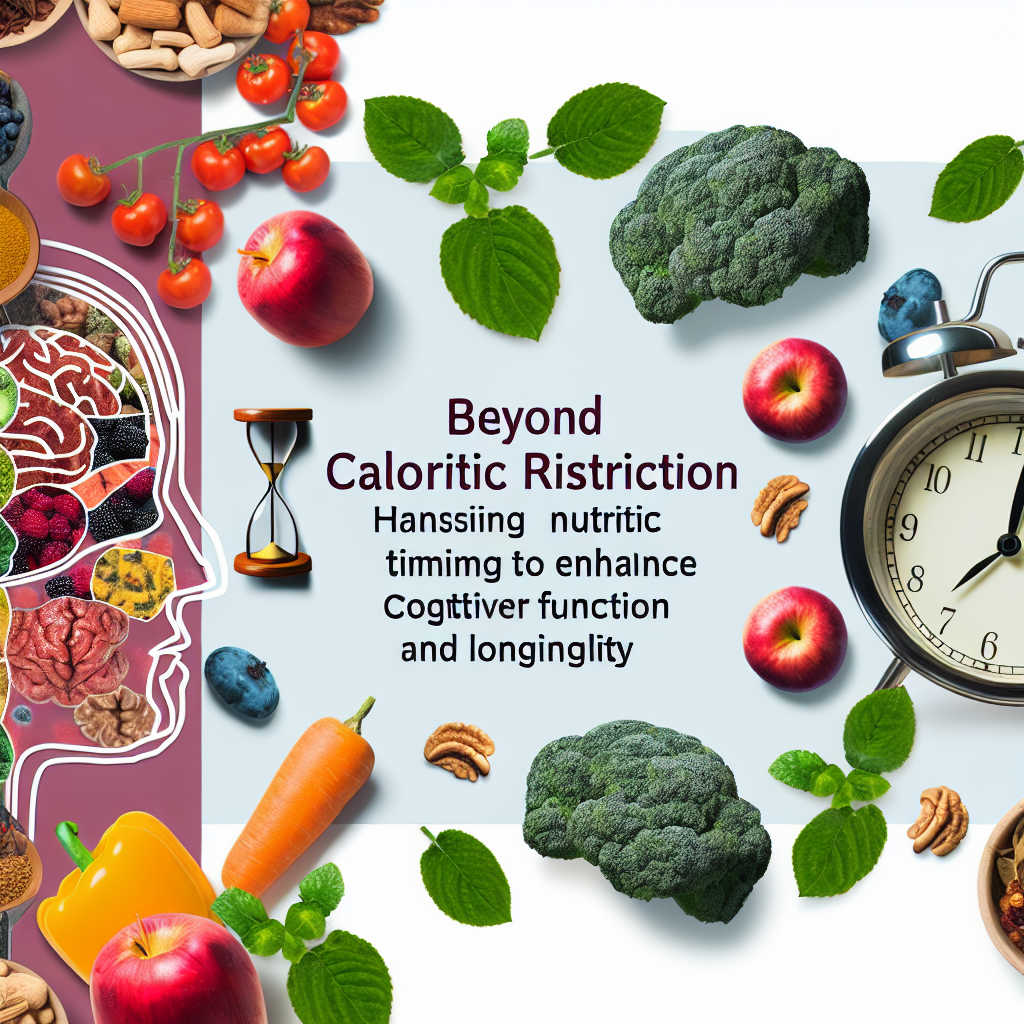
Beyond Caloric Restriction: Harnessing Nutrient Timing to Enhance Cognitive Function and Longevity
Introduction
In the quest for enhanced **cognitive function** and **longevity**, traditional dietary approaches have long focused on **caloric restriction**. This practice involves reducing the intake of calories while maintaining nutritional adequacy to promote a longer lifespan and prevent age-related diseases. However, emerging research is shedding light on the concept of **nutrient timing** as a powerful alternative or complement to caloric restriction. Nutrient timing revolves around the strategic scheduling of food intake, aligning it with the body’s natural **biological rhythms** and **metabolic processes**. This approach is gaining traction for its potential to optimize cognitive performance, prevent cognitive decline, and extend healthy lifespan without the stringent limitations associated with caloric restriction.
Recent studies have highlighted the significance of not only what we eat but also when we eat. Throughout the day, our bodies go through cycles influenced by **circadian rhythms**, which govern various physiological processes, including digestion, metabolism, and hormone production. By aligning nutrient intake with these natural cycles, individuals may experience improved brain function, increased energy levels, and a reduction in age-associated disorders. As our understanding of the intricate interplay between diet, circadian rhythms, and overall health deepens, nutrient timing emerges as a promising avenue for those seeking to optimize brain health and longevity naturally.
This approach challenges the conventional wisdom of traditional meal timings and urges us to consider personalized eating patterns that can harness the full potential of our body’s capabilities. As individuals become more health-conscious and look for ways to maintain cognitive vitality and extend their lifespan, the exploration of nutrient timing offers a fascinating frontier. In this article, we delve into the scientific underpinnings of nutrient timing, exploring its potential implications for cognitive function and longevity, and examine how it can be integrated into daily routines for maximum benefit.
Features
Scientific investigations into nutrient timing have provided compelling insights into its potential benefits. One noteworthy study conducted by the **Salk Institute for Biological Studies** explored the impact of **time-restricted feeding (TRF)** on metabolic health and longevity in mice. The researchers discovered that mice subjected to TRF, where feeding was limited to a specific window of time each day, showed significant improvements in metabolic health markers and increased lifespan compared to those allowed ad libitum access to food. This research suggests that timing, rather than just the quantity of calorie intake, plays a crucial role in regulating the biological pathways associated with aging and cognitive function (source: [ScienceDaily](https://www.sciencedaily.com/releases/2014/05/140515203826.htm)).
Moreover, human studies have illustrated the potential cognitive benefits of nutrient timing. The **Human Performance Laboratory at the University of Illinois** conducted a study examining the relationship between meal timing and cognitive function. They found that aligning meal times with circadian rhythms improved participants’ cognitive performance, memory retention, and attention span. For instance, consuming a substantial breakfast in the morning hours was associated with enhanced cognitive abilities throughout the day, while late-night eating appeared to have detrimental effects on cognitive function (source: [PubMed](https://pubmed.ncbi.nlm.nih.gov/27355664/)).
In addition to cognitive benefits, nutrient timing is believed to influence longevity through its effects on **autophagy**, a cellular process responsible for removing damaged cells and promoting cellular repair. Research published in the journal **Nature Communications** indicates that fasting or prolonged intervals between meals triggers autophagy, which may mitigate the accumulation of cellular damage associated with aging. This highlights the potential of strategically timed meal patterns to foster cellular renewal, consequently promoting longer, healthier lives (source: [Nature Communications](https://www.nature.com/articles/ncomms12680)).
Conclusion
Nutrient timing is emerging as a compelling strategy to optimize cognitive function and potentially extend lifespan, offering an innovative alternative to caloric restriction. By aligning our eating patterns with the body’s natural biological rhythms, we can enhance cognitive performance, support metabolic health, and stimulate cellular repair mechanisms that contribute to longevity. This powerful approach challenges traditional dietary paradigms, encouraging individuals to explore personalized meal schedules tailored to their unique circadian patterns.
As scientific exploration into nutrient timing continues, the potential benefits become more evident. It’s essential to look beyond traditional dietary restrictions and consider how timing can play a pivotal role in health optimization. As we seek natural and sustainable ways to support brain health and longevity, nutrient timing presents an exciting frontier in the quest for a healthier, more fulfilling life. While more research is needed to further validate these findings in diverse human populations, incorporating nutrient timing principles into our daily routines may pave the way for a future where cognitive vitality and extended well-being are within reach for all.
**Concise Summary:**
Nutrient timing, the strategic scheduling of food intake to align with biological rhythms, offers an alternative to caloric restriction for boosting cognitive function and longevity. Studies indicate that time-restricted feeding can improve metabolic health and lifespan in animals, while human research suggests enhanced cognitive performance through meal timing aligned with circadian rhythms. Additionally, nutrient timing may support longevity by inducing autophagy, aiding in cellular repair. This emerging approach encourages personalized eating patterns, aiming to naturally optimize brain health and well-being, providing a promising path for a healthier and longer life.

Dominic E. is a passionate filmmaker navigating the exciting intersection of art and science. By day, he delves into the complexities of the human body as a full-time medical writer, meticulously translating intricate medical concepts into accessible and engaging narratives. By night, he explores the boundless realm of cinematic storytelling, crafting narratives that evoke emotion and challenge perspectives.
Film Student and Full-time Medical Writer for ContentVendor.com