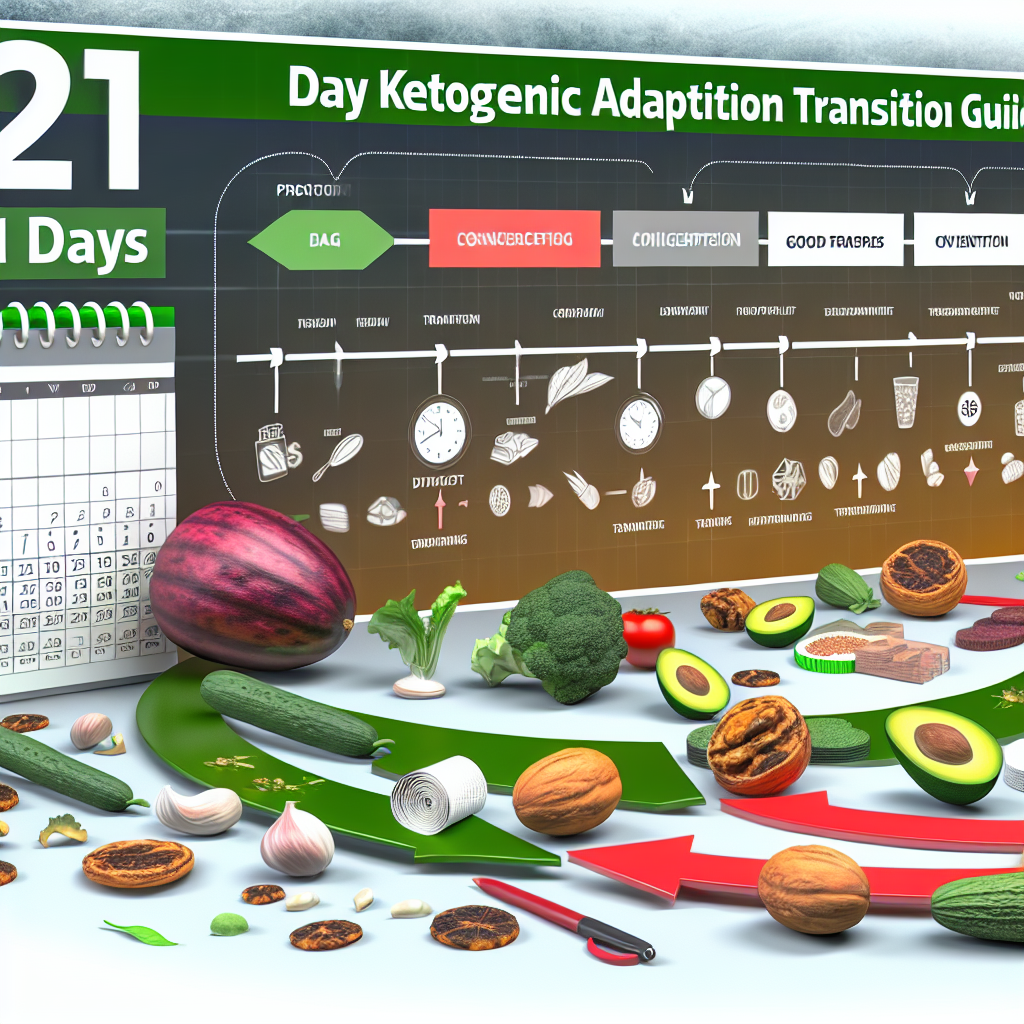
21-Day Ketogenic Adaptation Transition Guide
In today’s fast-paced world, diets vary greatly, each promising health benefits, weight loss, and overall wellness improvements. Among these, the **ketogenic diet** has gained immense popularity due to its effectiveness in promoting **weight loss** and enhancing **mental clarity**. In essence, the ketogenic (or **keto**) diet is a high-fat, moderate-protein, and low-carbohydrate regimen that propels the body into a state of **ketosis**. This metabolic state shifts the body’s energy source from glucose, derived from carbohydrates, to ketones, which are produced from stored fat. As a result, the body becomes a veritable fat-burning machine.
Transitioning into a ketogenic diet, however, can be daunting for many. The standard American diet is rich in carbohydrates, so the sudden reduction can lead to symptoms like **fatigue**, **irritability**, and even **headaches**—symptoms often dubbed the **”keto flu.”** Thus, having a structured 21-day adaptation guide can ease this transition, helping the body smoothly adjust to burning fat for fuel while minimizing discomfort.
Embarking on this 21-day journey requires careful planning and a shift in mindset. Initially, it’s crucial to educate oneself about the types of **foods** that align with **keto principles**. For instance, focus on choosing quality **fats** such as **avocados**, **olive oil**, and **nuts**, while protein sources might include **grass-fed beef**, **fish**, and **poultry**. Vegetables like **spinach**, **kale**, and **cauliflower** should be incorporated for their low-carb content and vital nutrients. During this transition period, maintaining proper **hydration** and **electrolyte balance** is vital in preventing the onset of keto flu symptoms. Integrating **supplemental minerals**, like **magnesium**, **potassium**, and **sodium**, can further assist in this stabilization.
Moreover, **patience** is key. Individual responses to dietary changes can vary, and it is essential to listen to your body’s signals. Gradually increasing fats while decreasing carbohydrates allows the body to adapt efficiently, paving the way for a smooth metabolic transition.
Understanding the mechanisms that underlie the ketogenic diet can empower individuals, making them more attuned to their body’s unique dietary needs. As the body becomes accustomed to using fat as its primary fuel source, many report heightened **energy levels** and improved **cognitive function**. Furthermore, the ketogenic diet is linked to other health benefits, such as reduced **inflammation** and stabilized **blood sugar levels**—a key consideration for those managing conditions like **type 2 diabetes**. Through consistency and informed decision-making, individuals can successfully harness the benefits of a ketogenic lifestyle through this 21-day adaptation.
Features: Professional and Medical Studies on Ketogenic Adaptation
The **ketogenic diet** is not just a passing trend; extensive scientific research supports its benefits and mechanisms of action. One pivotal study, conducted by the **Low-Carbohydrate Nutrition Research Group**, delved into the metabolic consequences of a ketogenic diet. Published in the “Journal of Clinical Investigation,” this study highlighted how adherence to a low-carb, high-fat diet induces ketosis, leading to significant reductions in **body weight** and improved **insulin sensitivity**.
Moreover, a **2018 study** published in the “Frontiers in Endocrinology” explored the relationship between the ketogenic diet and **neurological health**. The research emphasized the diet’s potential neuroprotective qualities, citing improvements in **brain metabolism** and reduced oxidative stress, ultimately enhancing **cognitive function** and reducing the risk of neurological disorders.
The keto diet’s impact on **cardiovascular health** also garners significant interest. A study in the “British Journal of Nutrition” examined how a high-fat, low-carbohydrate diet influences **lipid profiles**, finding that it can elevate levels of **high-density lipoprotein (HDL) cholesterol**—the “good” cholesterol—while lowering **triglycerides**, which collectively contribute to improved heart health.
Additionally, the diet’s potential in managing **type 2 diabetes** has been a focal point for researchers. In a study shared by the “American Diabetes Association,” participants following a ketogenic diet for a year experienced enhanced **glycemic control** and reduced reliance on antihyperglycemic medications.
These studies collectively illustrate the ketogenic diet’s multifaceted benefits, supporting its role in **weight management**, **neurological health**, **cardiovascular function**, and **diabetes management**. These scientific underpinnings provide a robust framework for individuals considering or currently undergoing a ketogenic diet transition, empowering them with knowledge to support their health goals.
Conclusion
Transitioning to a ketogenic diet and achieving **metabolic flexibility** through **ketosis** can be a transformative journey. While the initial 21 days may pose challenges, the potential for long-term benefits, including weight management, improved cognitive function, and enhanced metabolic health, make it a worthwhile endeavor. By leveraging scientific research and adopting a deliberate, structured approach, individuals can successfully navigate the path to ketosis, fostering a sustainable lifestyle change. The process demands patience, adaptability, and a willingness to learn about one’s unique nutritional needs—elements essential for unlocking the **keto diet’s** full potential. Empowered with knowledge and a comprehensive transition guide, individuals can embark on a ketogenic journey that aligns with their health aspirations, leading them toward heightened well-being and vitality.
**Concise Summary:**
The 21-Day Ketogenic Adaptation Transition Guide outlines a structured approach to ease the shift to a ketogenic diet, emphasizing a high-fat, low-carb regimen to promote weight loss and mental clarity. Key strategies include selecting appropriate fats and proteins, maintaining electrolyte balance, and being patient with one’s body. Supported by scientific studies, the keto diet offers benefits such as improved insulin sensitivity, cognitive function, and heart health, while managing conditions like diabetes. A thorough understanding of keto principles and its benefits empowers individuals through this transformative journey toward enhanced well-being.

Dominic E. is a passionate filmmaker navigating the exciting intersection of art and science. By day, he delves into the complexities of the human body as a full-time medical writer, meticulously translating intricate medical concepts into accessible and engaging narratives. By night, he explores the boundless realm of cinematic storytelling, crafting narratives that evoke emotion and challenge perspectives.
Film Student and Full-time Medical Writer for ContentVendor.com