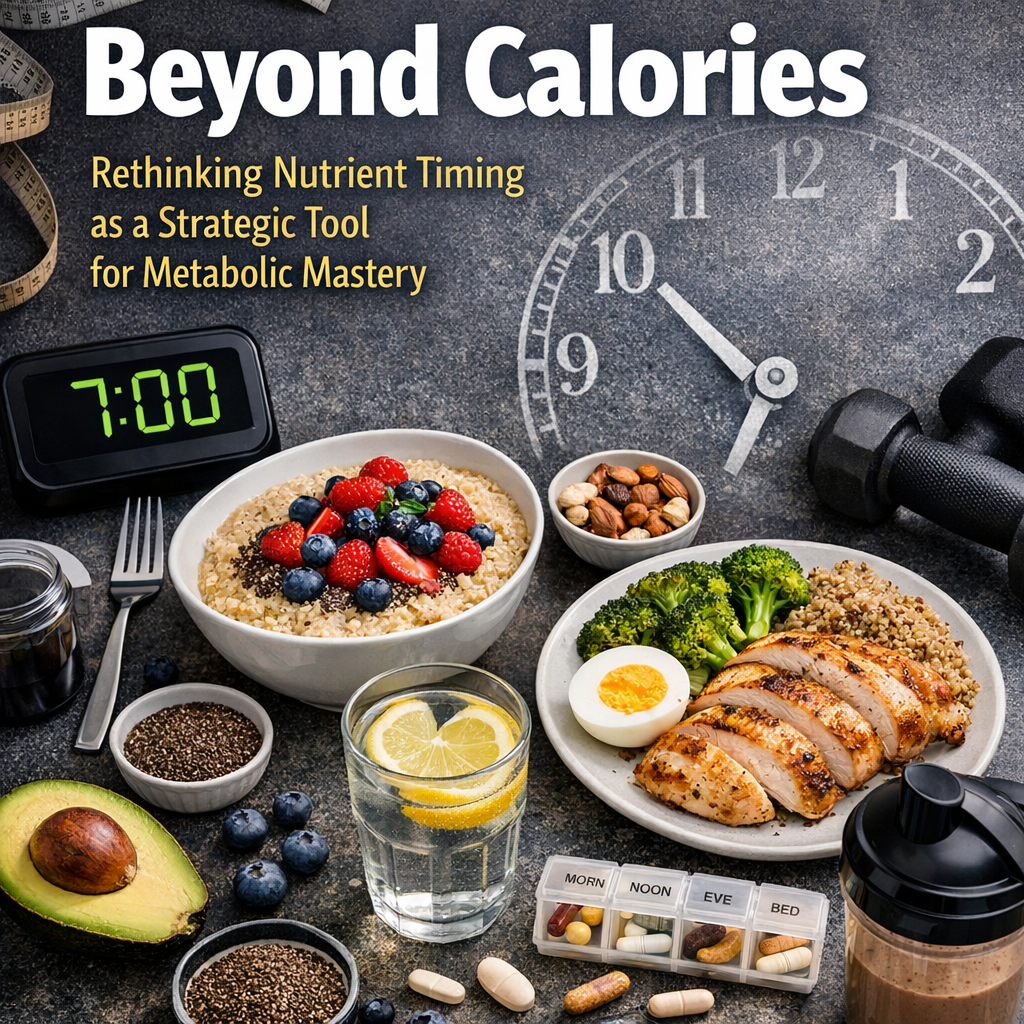
Beyond Calories: Rethinking Nutrient Timing as a Strategic Tool for Metabolic Mastery
Introduction:
In the realm of nutrition, conversations often center around caloric intake, macronutrient ratios, and diet plans filled with superfoods. However, a deeper strategy gaining traction is nutrient timing. This concept suggests that both the quantity and quality of food, along with the timing of consumption, can significantly impact metabolic health and overall well-being.
Nutrient timing is about more than just weight loss or muscle building; it’s about optimizing the body’s natural rhythms to enhance energy levels, improve digestion, and stabilize blood sugar. Understanding circadian rhythms—internal body clocks guiding metabolic processes—reveals the connection between eating times and bodily functions. Aligning eating patterns with these rhythms can lead to metabolic mastery.
In everyday life, this could mean having a breakfast that boosts metabolism not just because of its content, but because of when it’s consumed. By aligning our dining to support natural processes, we might achieve better sleep and efficient overnight metabolic functions. Beyond broad concepts, nutrient timing explores meal frequency optimization, food intake coordination with physical activity, and understanding food interactions with our biological clocks. The rise of nutrient timing could be crucial for a balanced, effective, and health-focused lifestyle.
Features:
Emergent research highlights nutrient timing’s effectiveness on metabolic health. For instance, studies from the *Journal of Biological Rhythms* demonstrate that aligning meals with circadian rhythms can improve metabolic markers like insulin sensitivity and blood lipid profiles. Individuals consuming most of their calories early in the day show better metabolic outcomes than those eating primarily at night ([Journal of Biological Rhythms](https://journals.sagepub.com/doi/full/10.1177/0748730418786680)).
Additionally, a study in the *American Journal of Clinical Nutrition* explores nutrient timing’s influence on athletic performance. Consuming a protein-rich meal around strength training enhances muscle synthesis and reduces recovery time, fostering an anabolic environment for nutrient uptake when muscles are most responsive ([American Journal of Clinical Nutrition](https://academic.oup.com/ajcn/article/99/6/1218/4637743)).
Further, the concept of ‘chrononutrition,’ emphasized in a *Cell Reports* study, associates meal timing with gut health. The gut microbiome follows a diurnal cycle; mistimed eating can disrupt its balance, potentially leading to metabolic disorders ([Cell Reports](https://www.cell.com/cell-reports/fulltext/S2211-1247(21)01181-3)). This suggests nutrient timing’s impact on overall health extends to digestion, a key component of functional health.
These discoveries encourage a personalized approach to nutrition, extending beyond caloric manipulation to fine-tune eating habits based on individual metabolic and lifestyle needs. Nutrient timing then emerges as a comprehensive lifestyle practice aligning nutrition with biological rhythms.
Conclusion:
Nutrient timing shifts the nutritional science paradigm, emphasizing ‘when’ alongside ‘what’ and ‘how much’ in dietary choices. Aligning food intake with circadian rhythms promotes metabolic efficiency and holistic health. This approach promises better management of weight, muscle mass, and improved energy levels, digestive health, and overall well-being.
Ancient wisdom of ‘eating with the sun’ finds validation in modern science as a means of achieving metabolic mastery. Rethinking traditional focuses on calories and food types, nutrient timing offers novel wellness pathways. It lays the groundwork for a dynamic, responsive nutritional approach, adapting to individual life rhythms and demands.
Concise Summary:
Nutrient timing highlights the importance of meal timing alongside food quantity and quality, aligning eating patterns with our circadian rhythms for enhanced metabolic health. Research shows improved metabolic markers and athletic performance when meals align with biological rhythms, while mistimed eating can disrupt gut microbiome balance. This comprehensive lifestyle approach encourages personalization based on unique metabolic and lifestyle needs, promoting metabolic efficiency and holistic health. This strategy offers a dynamic, responsive nutritional approach, reaffirming ancient practices with modern science to support wellness.

Dominic E. is a passionate filmmaker navigating the exciting intersection of art and science. By day, he delves into the complexities of the human body as a full-time medical writer, meticulously translating intricate medical concepts into accessible and engaging narratives. By night, he explores the boundless realm of cinematic storytelling, crafting narratives that evoke emotion and challenge perspectives.
Film Student and Full-time Medical Writer for ContentVendor.com