Unlocking Food Intelligence: The Future of Personal Nutrition Algorithms
In an age where technology is entwined with daily life, the quest for personalized solutions reaches far beyond gadgets and apps. One fascinating frontier is personal nutrition algorithms, a promising domain foreseen to redefine how we perceive food and health. As data advances, our understanding of “food intelligence” evolves, opening doors to tailored dietary recommendations that consider genetic makeup, lifestyle, and health data. Imagine a world where your meals are precisely engineered, not only enhancing your well-being but actively responding to your body’s unique needs.
Personal nutrition algorithms leverage technology to craft dietary strategies tailored to individual profiles. This aspect of food intelligence taps into the growing fields of genomics and biomedicine. DNA tests offered by companies like [23andMe](https://www.23andme.com) have popularized genetic exploration, revealing connections between genetic variants and nutrient needs. For instance, certain genes influence how we metabolize caffeine or omega-3 fatty acids, suggesting that a one-size-fits-all diet is outdated. Personalized nutrition algorithms interpret these genetic markers, lifestyle habits, health data, and even microbiome intricacies, creating a customized nutrition blueprint.
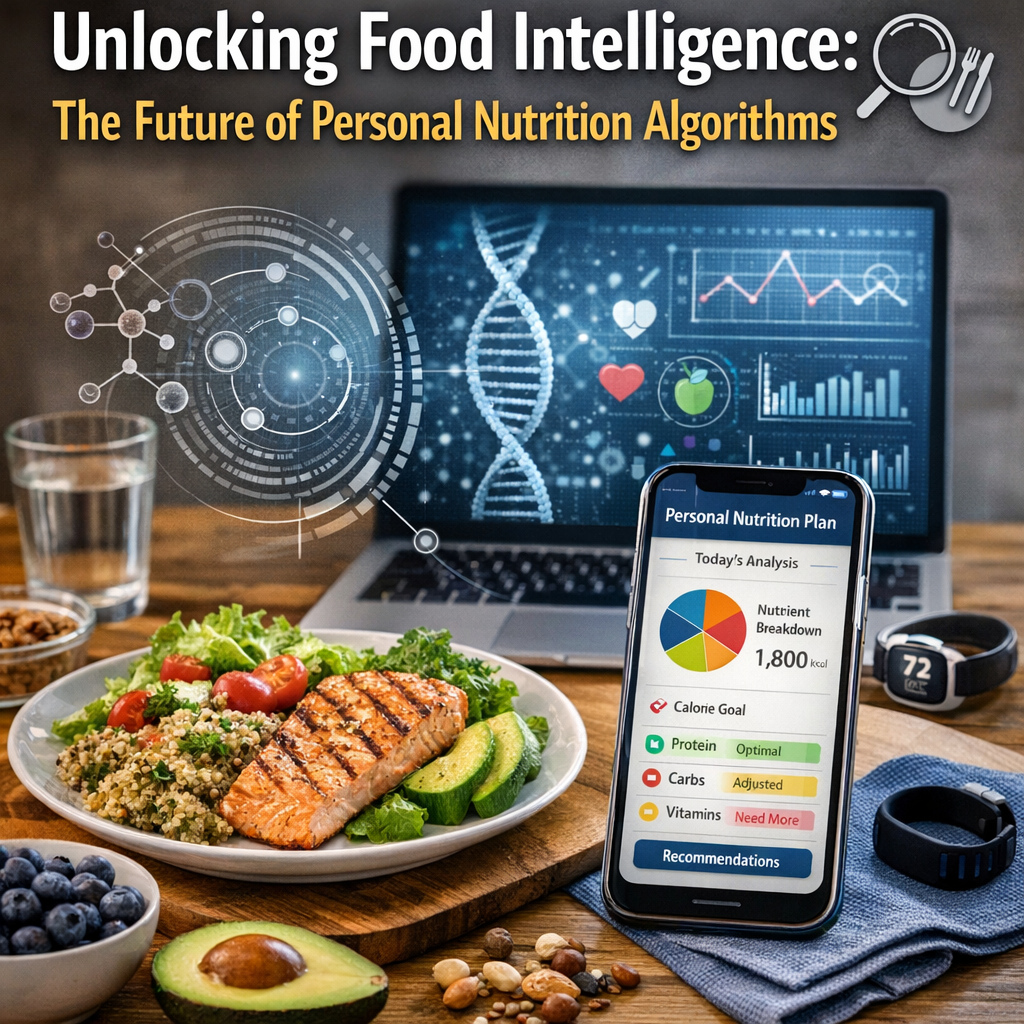
These algorithms are designed to integrate seamlessly with existing technology. Imagine a smart refrigerator suggesting meals based on your health goals or a fitness tracker recording real-time metabolic responses to specific foods. These innovations not only promote optimal health but also encourage sustainable consumer habits by minimizing food waste through precise portion recommendations. Algorithms can further adapt meal plans according to age, health conditions, dietary restrictions, and preferences, promoting inclusivity in nutritional guidance.
A majority of these advancements are fueled by Artificial Intelligence (AI) and machine learning, which process extensive datasets to uncover patterns and insights into human nutrition. Companies are exploring partnerships with AI platforms to develop sophisticated algorithms that analyze dietary data. Real-time insights allow users to receive recommendations that evolve alongside their bodies’ shifting requirements, ensuring that the dietary strategies are always up-to-date and relevant.
While personalized nutrition is burgeoning, it is anchored in extensive scientific research that validates technological potential. Ongoing developments in nutritional genomics, microbiome studies, and AI continue to bolster its legitimacy. As the world transitions towards a more digitally integrated lifestyle, personal nutrition algorithms signify an epochal shift towards precision health, where food evolves from sustenance to science-backed therapeutic practice.
Features: Studies and Scientific Insights
Several scientific studies support the burgeoning field of personalized nutrition. A groundbreaking research piece published in [Cell](https://www.cell.com) explored how different individuals respond to identical meals. Despite consuming standardized meals, blood glucose levels varied significantly among participants. This study highlighted the inadequacy of generalized dietary guidelines and underscored the need for personalized dietary planning.
Furthermore, the “Food4Me” study, a European Union-funded research project, investigated personalized nutrition across several countries. The findings revealed that tailored dietary advice led to more significant improvements in dietary adherence and health markers compared to generic guidelines. Participants receiving advice based on genetic information demonstrated greater reduction in body mass index (BMI) and waist circumference, indicating the profound impact of personalizing dietary recommendations.
Microbiome research also plays a critical role in personalized nutrition. Studies have shown that gut bacteria significantly influence how we metabolize food, respond to nutrients, and dictate our overall health. By utilizing microbiome profiling, personal nutrition algorithms can create diets that encourage beneficial gut flora, potentially reducing risks of chronic diseases such as obesity and diabetes.
Moreover, advancements in nutrigenomics, the study of nutrition’s relationship with the genome, empower algorithms to provide precise dietary recommendations. Research suggests that certain genetic variants can affect nutrient absorption and metabolism, impacting overall health. For instance, individuals with a particular form of the FTO gene may require fewer carbohydrates to prevent weight gain, emphasizing how genetic considerations can fine-tune dietary recommendations.
Healthcare institutions are embracing these scientific insights. The [National Institutes of Health (NIH)](https://nih.gov) funds extensive research into personalized nutrition’s potential to revolutionize healthcare. Integrating scientific discoveries with technological innovations continues to enhance our understanding of nutrition and optimize personal health strategies. By validating the significance of genetic, metabolic, and microbiome factors, medical research underpins the algorithms that promise a future of personalized, predictive nutrition.
Conclusion: Shaping the Future of Nutrition
The integration of personal nutrition algorithms represents a transformative shift in how we approach diet and health. The promise of food intelligence lies not just in addressing individual nutritional needs, but in propelling a broader movement towards sustainability, health equity, and preventative care. As technology and science progress in unison, these algorithms herald an era of health empowerment — where each individual commands their dietary journey with precision.
Moreover, personal nutrition algorithms underscore the necessity of continuous research and development. Ongoing studies and advancements will ensure that personalized nutrition remains scientifically backed, addressing concerns over privacy, data security, and accessibility. Ultimately, as we’ve witnessed with other digital innovations, the democratization of personal nutrition could revolutionize our approach to wellness, making it accessible to everyone, everywhere.
To engage further with the transformative potential of personal nutrition algorithms, sources such as academic journals and industry white papers serve as invaluable resources: [Food4Me Study](https://journals.plos.org/plosone/article?id=10.1371/journal.pone.0176632) and [NIH on Nutrigenomics](https://nih.gov).
By embracing the future of food intelligence, we step into a world where nutrition is not a guessing game, but a well-calculated personal tool that crafts our path to optimal health.
Concise Summary
Personal nutrition algorithms are revolutionizing how we approach diets by tailoring dietary strategies to individual profiles based on genomic data, lifestyle, and health information. Utilizing advances in AI and machine learning, these algorithms process extensive datasets to create personalized recommendations that evolve with an individual’s unique needs. Scientific studies validate their potential, showing significant health benefits such as reduced BMI and improved dietary adherence. As personal nutrition advances, it promises not only precision health but also a movement towards sustainable and preventive healthcare, where nutrition is guided by science-backed insights rather than generalized guidelines.

Dominic E. is a passionate filmmaker navigating the exciting intersection of art and science. By day, he delves into the complexities of the human body as a full-time medical writer, meticulously translating intricate medical concepts into accessible and engaging narratives. By night, he explores the boundless realm of cinematic storytelling, crafting narratives that evoke emotion and challenge perspectives.
Film Student and Full-time Medical Writer for ContentVendor.com