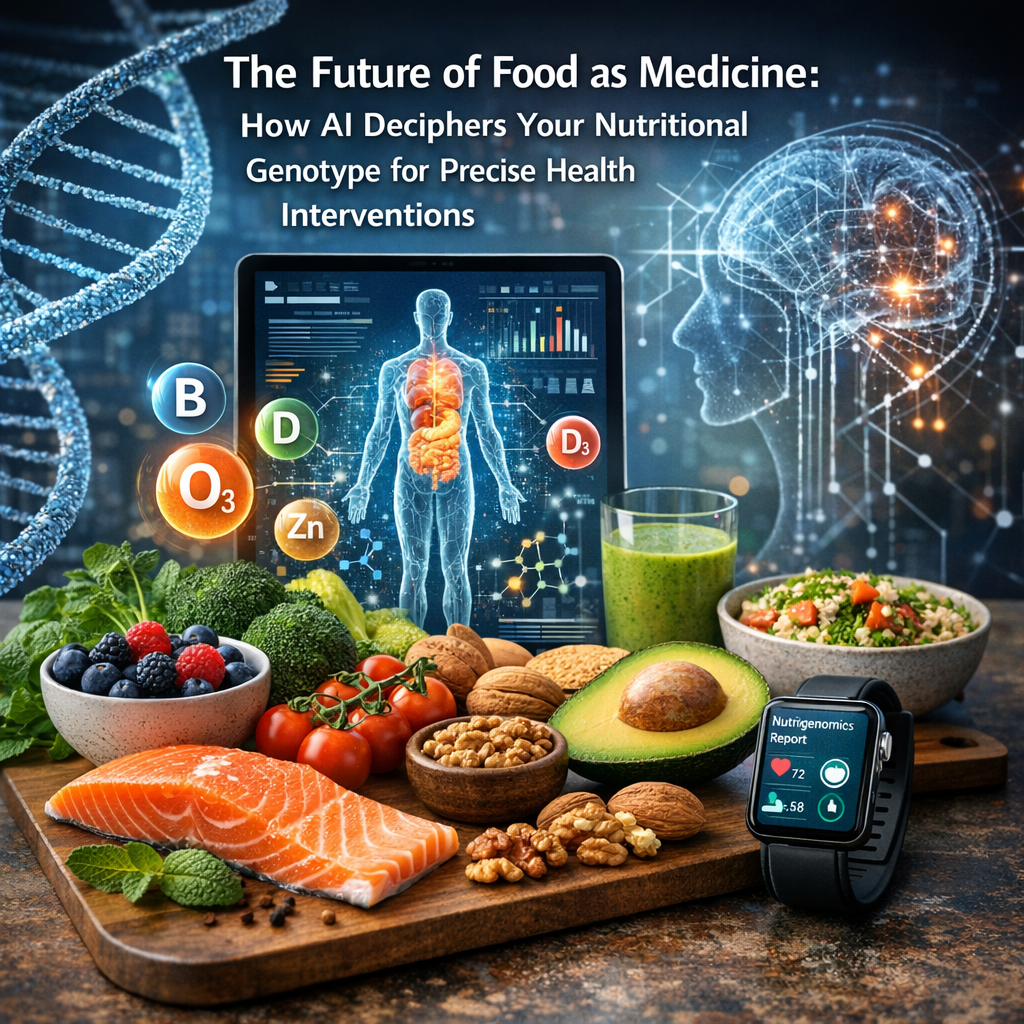
The Future of Food as Medicine: How AI Deciphers Your Nutritional Genotype for Precise Health Interventions
Introduction:
In an era characterized by technological advancements and growing interest in personalized health solutions, the concept of “food as medicine” is gaining unprecedented traction. As individuals increasingly seek natural remedies and homeopathic solutions, the intersection of artificial intelligence (AI) and nutritional genomics emerges as a groundbreaking frontier. AI’s ability to process vast amounts of data and uncover patterns in human genetics opens new pathways for customizing dietary regimens that promote health and prevent diseases.
Until recently, the intersection of nutrition and genetics was an elusive and underexplored area. Nutritional genomics, or nutrigenomics, involves the study of how genes influence dietary responses. This branch of science holds potential in understanding individual variations in nutrient metabolism and disease susceptibility. Although personalized nutrition was once limited to theoretical research, advancements in AI have democratized access, providing consumers with actionable health insights based on their genetic profile.
Imagine a future where your genetic blueprint guides your diet choices, not just to satisfy your taste buds, but to optimize your health outcomes. This approach isn’t just hypothetical; it is becoming an emerging reality. AI systems can now analyze an individual’s genetic data, lifestyle habits, and clinical history to recommend specific foods that enhance their well-being. From fine-tuning nutrient intakes to suggesting herbal remedies precisely aligned with one’s genotype, the benefits of this personalized method are immense.
Current trends in health and wellness are driven by consumers eager to remain proactive in their health management. The ability to leverage insights from cutting-edge AI systems for dietary recommendations is not only appealing but pivotally important. The future landscape of diet, health, and disease management awaits a paradigm shift, one where AI bridges the gap between advanced genetic understanding and everyday nutrition.
Features:
Recent advancements in gene-related nutritional therapy highlight the potent role AI plays in deciphering the intricate language of our DNA. Notably, the field of artificial intelligence has witnessed considerable breakthroughs, enhancing our understanding of genomic data and its practical translation into nutritional advice. For instance, a study published in [*Nature Medicine* in 2019](https://www.nature.com/articles/s41591-019-0493-3) revealed that AI-driven algorithms could predict individual blood glucose responses to different foods better than traditional dietary guidelines. This study marks a pivotal step towards individualized nutrition planning, underscoring the importance of personalized health interventions.
Prominent research from the [American Journal of Clinical Nutrition](https://academic.oup.com/ajcn/article/110/2/244/5513362) has illustrated the profound impact of AI in refining nutrigenomics. In their comprehensive analyses, researchers harnessed machine learning to identify genetic markers associated with specific nutrient deficiencies, allowing them to craft highly specialized dietary recommendations. Another fascinating development can be found in research utilizing AI algorithms to pinpoint potential benefits of herbal treatments and natural supplements. By considering a person’s genetic predispositions, these AI systems provide nuanced insights into which herbal solutions may offer preventive or therapeutic benefits.
A landmark genome study by [*Science Advances* (2021)](https://www.science.org/doi/10.1126/sciadv.abd1237) outlines how AI models can unravel gene-nutrient interactions, enabling precise interventions in managing lifestyle-related conditions such as obesity, diabetes, and cardiovascular diseases. This aligns with the burgeoning field of precision health, where nutrition and genotype interaction herald an era of customized curative strategies that could revolutionize conventional medicine paradigms.
In essence, AI-backed nutritional genomics extends beyond traditional medicine by tapping into preventive and homeopathic care. Whether through aiding in weight management, managing chronic conditions, or promoting general wellness, these innovations represent the future trajectory of healthcare—precise, personalized, and informed by genetic insights.
Conclusion:
The future of food as medicine, powered by the synergy of AI and nutritional genomics, promises a revolutionary approach to health management. By leveraging AI’s prowess in genetic analysis, individuals can achieve a new level of precision in their health interventions, far exceeding generic dietary recommendations. As AI continues to mature in deciphering our nutritional genotype, individuals and health practitioners alike will benefit from interventions finely tuned to genetic profiles.
This transformation heralds a shift toward a more personalized, predictive, and preventive form of healthcare. As these technologies become increasingly accessible, embracing AI-assisted dietary strategies could lead to significant improvements in public health. The convergence of artificial intelligence and nutritional genomics underscores the power of food as medicine, offering a future where diet is a finely tuned therapeutic tool, actively shaping our health landscapes. This evolving paradigm brings us closer to the ideal of personalized medicine, ensuring that your unique genetic framework is at the helm of your nutritional decisions.
Concise Summary:
The fusion of AI and nutritional genomics is transforming how food is used as medicine. By processing genomic data, AI enables precise dietary recommendations tailored to individual genetic profiles. This personalized approach enhances health management by optimizing dietary choices to prevent diseases and manage chronic conditions. Landmark studies affirm AI’s capability in refining nutrigenomics, predicting nutrient responses, and identifying beneficial herbs and supplements. As these technologies become more accessible, the synergy of AI and genomics promises to revolutionize personalized healthcare, positioning food as a powerful therapeutic tool tailored to genetic makeup.

Dominic E. is a passionate filmmaker navigating the exciting intersection of art and science. By day, he delves into the complexities of the human body as a full-time medical writer, meticulously translating intricate medical concepts into accessible and engaging narratives. By night, he explores the boundless realm of cinematic storytelling, crafting narratives that evoke emotion and challenge perspectives.
Film Student and Full-time Medical Writer for ContentVendor.com