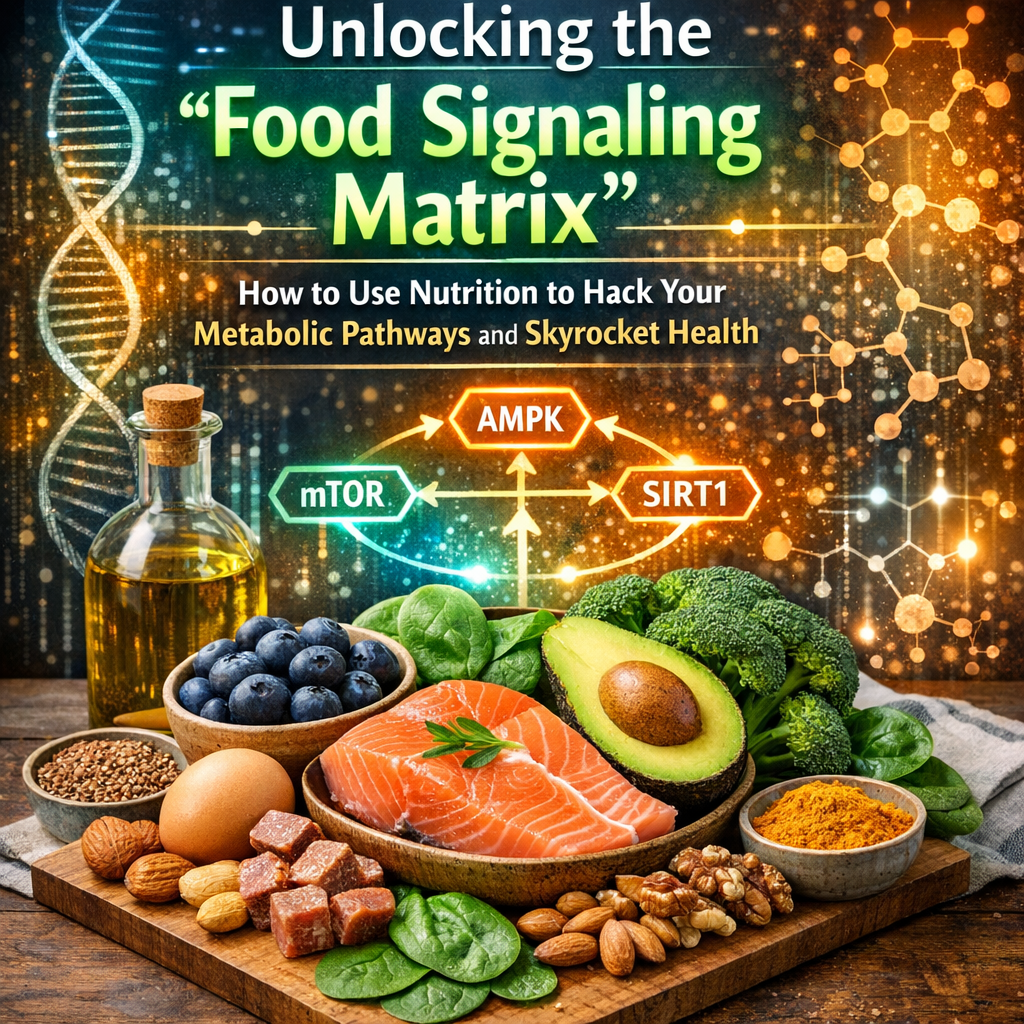
Unlocking the “Food Signaling Matrix”: How to Use Nutrition to Hack Your Metabolic Pathways and Skyrocket Health
Introduction
In the quest for optimal health, many turn to natural cures and holistic modalities. One area gaining increased attention is the study of the ”Food Signaling Matrix”, a concept that combines nutrition science with the body’s innate signaling systems. Deep within our cells lies an intricate network of pathways and signals that govern everything from energy production to cellular repair and immune functioning. These metabolic pathways are the body’s natural mechanisms for sustaining life and health. When optimized through the right nutritional strategies, these pathways can be fine-tuned to enhance health, delay aging, and prevent diseases.
Nutrition is much more than just calorie intake. Emerging research emphasizes the idea of food as a complex matrix of signals that communicate with our biological systems. Every bite we take sends signals that can either support our health or contribute to disease processes. Such nuanced interactions between diet and health highlight the importance of nutrient density and bioavailability. Foods rich in vitamins, minerals, antioxidants, and phytochemicals hold the key to activating beneficial pathways while deactivating the detrimental ones.
Functional foods, adaptogens, and herbal treatments are central to this approach. Adaptogens like ginseng and ashwagandha help to balance cortisol levels and stress responses, while polyphenol-rich foods like berries and green tea promote autophagy—the body’s natural way of cleaning out damaged cells. Ayurveda and Traditional Chinese Medicine (TCM) have long recognized these effects, using food as medicine to harmonize bodily functions and promote balance.
The concept of the Food Signaling Matrix encourages us to eat not just to fill our stomachs but to feed our cells, influencing biochemical processes at the deepest levels. It invites us to explore the potential of certain foods and compounds to target specific metabolic pathways, offering possibilities for personalized dietary interventions in managing and preventing diseases. As science advances, this understanding will no doubt reshape how we think about food and its impact on our health.
Features
Scientific research has revealed fascinating insights into how certain nutrients and bioactive compounds modulate metabolic pathways, offering new opportunities to enhance health through diet.
One key player is the mTOR (mammalian target of rapamycin) pathway, which regulates cell growth, proliferation, and survival. Overactivation of this pathway is implicated in aging and cancer. However, dietary interventions can modulate mTOR activity. A study published in *Nature Medicine* ([2017](https://www.nature.com/articles/nm.4236)) found that intermittent fasting and caloric restriction effectively suppress mTOR, promoting longevity and reducing disease risk. Such findings underscore the power of strategic dietary choices in managing critical metabolic pathways.
Another compelling pathway is AMPK (adenosine monophosphate-activated protein kinase), often described as a metabolic master switch. It plays a crucial role in energy balance and is activated by stressors like exercise and certain dietary components. Research in the *Journal of Molecular Science* ([2018](https://www.mdpi.com/1422-0067/19/2/378)) indicates that compounds such as resveratrol from grapes and berberine from herbs activate AMPK, enhancing glucose uptake and fat oxidation, which are beneficial for metabolic health.
Moreover, the NF-kB (nuclear factor kappa-light-chain-enhancer of activated B cells) pathway, central to inflammation, can be modulated by food. Chronic inflammation is a root cause of many diseases, and diet plays a crucial role in its regulation. A study in the *Journal of Clinical Investigation* ([2021](https://www.jci.org/articles/view/145401)) highlights the anti-inflammatory properties of omega-3 fatty acids found in fish oil, which inhibit NF-kB signaling, thereby protecting against heart disease and other inflammatory conditions.
These findings are a testament to the interconnectedness of nutrition and metabolic pathways, suggesting that a well-planned diet rich in specific nutrients can manipulate these pathways to promote health and longevity. By understanding the matrix of food signals, we can target and potentially “hack” these pathways, contributing to disease prevention and health optimization.
Conclusion
The exploration of the Food Signaling Matrix offers a revolutionary approach to health and wellness. By recognizing the profound impact specific foods and nutrients have on our metabolic pathways, we can take a more informed and proactive stance in optimizing our well-being. This matrix goes beyond traditional dietary guidelines, providing a blueprint for using food as a tool for cellular communication and metabolic regulation. With mounting scientific evidence supporting the modulation of pathways like mTOR, AMPK, and NF-kB through dietary strategies, we enter an era where personalized nutrition can profoundly impact public health.
As we deepen our understanding of these intricate mechanisms, it becomes increasingly clear that what we eat can directly influence our biology, paving the way for innovative treatments using nature’s best resources. Future research and clinical applications may not only transform our approach to diet but also offer new ways to combat the most significant health challenges of our time. Embracing the power of the Food Signaling Matrix aligns with the ancient wisdom of using food as medicine, bolstered by modern scientific insights into metabolic pathways.
Concise Summary:
The “Food Signaling Matrix” combines nutrition science with the body’s signaling systems to optimize health. By understanding how food signals affect metabolic pathways like mTOR, AMPK, and NF-kB, we can utilize diet to enhance longevity, prevent diseases, and promote wellness. Studies highlight the benefits of intermittent fasting, resveratrol, and omega-3 fatty acids in modulating these pathways. Emphasizing nutrient-rich foods such as adaptogens and polyphenol-rich items like berries aligns ancient practices with modern science, offering a transformative approach to personalized nutrition and public health.

Dominic E. is a passionate filmmaker navigating the exciting intersection of art and science. By day, he delves into the complexities of the human body as a full-time medical writer, meticulously translating intricate medical concepts into accessible and engaging narratives. By night, he explores the boundless realm of cinematic storytelling, crafting narratives that evoke emotion and challenge perspectives.
Film Student and Full-time Medical Writer for ContentVendor.com