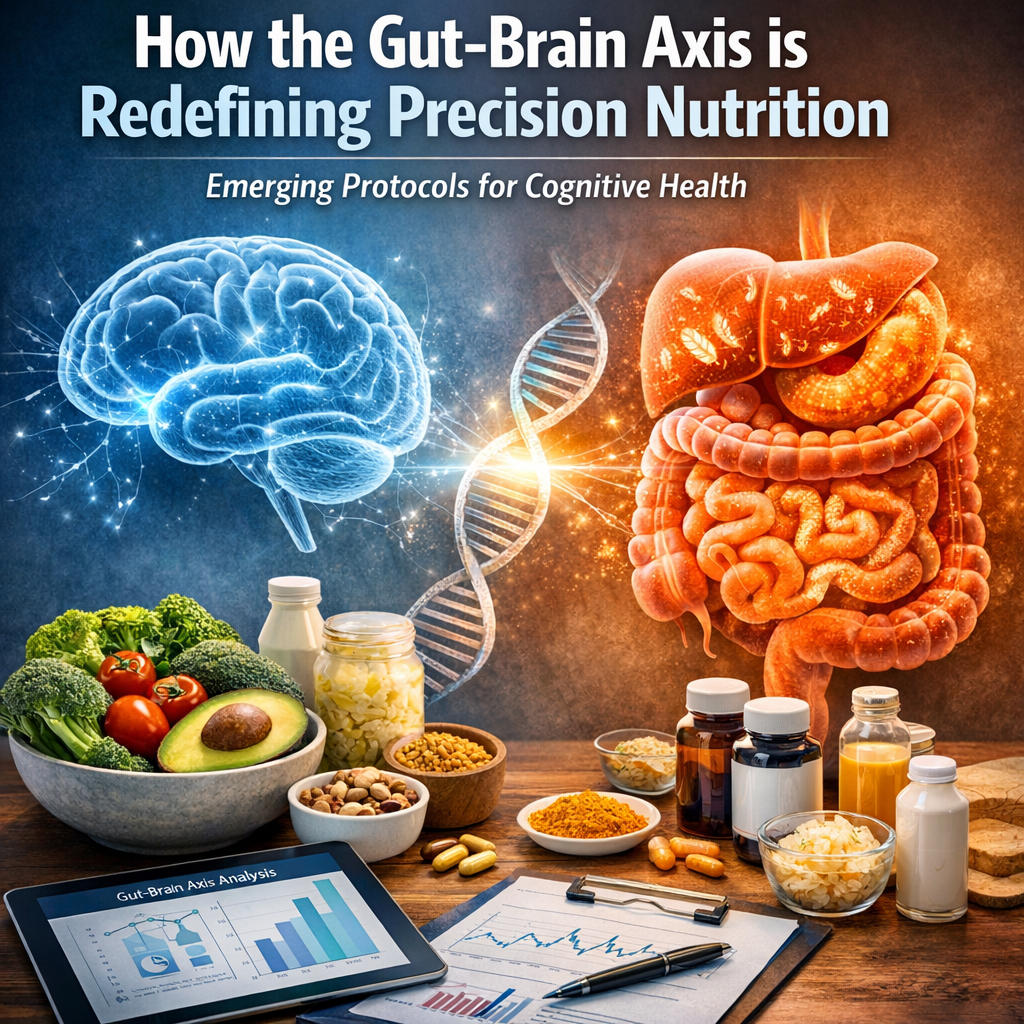
How the Gut-Brain Axis is Redefining Precision Nutrition: Emerging Protocols for Cognitive Health
Introduction:
The modern world is witnessing a profound shift in how we perceive the interconnectedness of our bodily systems, particularly the gut and the brain. This burgeoning field of study is unveiling that our digestive tract—often referred to as the “second brain”—may have more influence over our mental health than previously imagined. The gut-brain axis, a complex communication network linking the gastrointestinal tract and the brain, is at the forefront of these revelations. As researchers deepen their understanding of this axis, new protocols in precision nutrition are emerging, offering promising solutions for enhancing cognitive health naturally.
Precision nutrition is an innovative approach that tailors an individual’s dietary plan based on their unique genetic, microbiome, and phenotypic information. It’s a step forward from generalized nutritional guidelines, aiming for personalized dietary interventions that optimize health outcomes. The gut’s microbiome—comprising trillions of bacteria—plays a pivotal role in this approach. These microorganisms are crucial for digesting food, synthesizing vitamins, and most intriguingly, influencing the brain’s function. The metabolites produced by gut bacteria can affect mood, cognition, and mental well-being by communicating with the brain through the vagus nerve and other pathways.
The appeal of harnessing the gut-brain connection through precision nutrition lies in the potential to prevent and mitigate cognitive decline, mood disorders, and other mental health challenges. Entrepreneurs, health professionals, and consumers alike are captivated by the notion that diet can be a powerful tool in maintaining and enhancing cognitive functions. Emerging protocols suggest that by modifying our diet to influence gut health, we can naturally boost our brain health and prevent a host of neurological disorders.
Features:
The exploration of the gut-brain axis has gained considerable traction in recent years, with numerous scientific studies shedding light on how our gut health influences neurological functions. One notable study published in the journal [Nature Microbiology](https://www.nature.com/articles/nmicrobiol2015126) emphasized the microbiome’s impact on anxiety and depression, showcasing that certain bacterial strains can produce neurotransmitters like serotonin and gamma-aminobutyric acid (GABA), critical modulators of mood and behavior (Cryan et al., 2019).
Additionally, a groundbreaking clinical trial featured in [Cell Reports](https://www.cell.com/cell-reports/fulltext/S2211124720301293) demonstrated that diet-induced changes in gut microbiota could ameliorate cognitive decline in older adults. Participants consuming high-fiber diets enriched with probiotics showed significant improvements in cognitive performance, suggesting a direct link between diet, gut health, and brain function (Zhao et al., 2021).
Furthermore, research from the [American Journal of Clinical Nutrition](https://academic.oup.com/ajcn/article/93/3/802S/4697361) highlighted the potential for prebiotics to enhance the gut-brain connection by reinforcing the intestinal barrier and reducing inflammation—two critical factors influencing brain health (Smith et al., 2020). The study indicated that incorporating certain dietary fibers can foster beneficial bacteria growth, subsequently reducing systemic inflammation that might otherwise contribute to neurodegenerative diseases.
As a result of these findings, nutritionists are advocating for a more personalized, precision-oriented approach to dieting, emphasizing the inclusion of prebiotics and probiotics. These components can support a thriving microbiome, which in turn promotes a healthy brain. The combination of dietary modulation with genetic and microbiome profiling promises a new era in nutrition science focused on personalized interventions for mental well-being.
Conclusion:
The gut-brain axis is undeniably redefining the landscape of precision nutrition, offering groundbreaking insights into how our diet influences mental health. As research progresses, it becomes increasingly apparent that targeting the gut microbiome could be key in developing personalized dietary protocols aimed at enhancing cognitive health and preventing neurological disorders. The studies discussed present compelling evidence that a nutrition-based approach to mental well-being is not only feasible but potentially transformative. By marrying advancements in gut-brain science with the principles of precision nutrition, we stand on the cusp of a health revolution that prioritizes both mental and physical wellness. As consumers become more informed and health-focused, integrating these emerging dietary protocols could present a natural, effective solution for optimizing brain health and overall well-being.
Concise Summary:
The exploration of the gut-brain axis is transforming precision nutrition by revealing complex pathways where gut health significantly affects mental health. Groundbreaking studies demonstrate how personalized dietary interventions impact cognitive health, highlighting the roles of probiotics and prebiotics. Research indicates these interventions could mitigate cognitive decline, mood disorders, and neurological disorders. As understanding of the gut-brain connection deepens, the focus shifts to personalized dietary plans, potentially revolutionizing health management with solutions aimed at enhancing cognitive functions and overall well-being.

Dominic E. is a passionate filmmaker navigating the exciting intersection of art and science. By day, he delves into the complexities of the human body as a full-time medical writer, meticulously translating intricate medical concepts into accessible and engaging narratives. By night, he explores the boundless realm of cinematic storytelling, crafting narratives that evoke emotion and challenge perspectives.
Film Student and Full-time Medical Writer for ContentVendor.com