Revolutionizing Chronic Illness Management: The Future of AI-Driven Personalized Nutrition Protocols
Introduction
In the ever-evolving landscape of healthcare, chronic illnesses continue to pose significant challenges to patients and healthcare providers alike. Diseases such as diabetes, coronary heart disease, obesity, and autoimmune disorders affect millions worldwide, requiring continuous management and care. Traditional treatment modalities often rely heavily on medications and generalized dietary advice, which may not adequately address the unique needs of individuals. However, the emergence of Artificial Intelligence (AI) in personalized nutrition is transforming chronic illness management, offering more tailored, efficient, and effective care solutions.
Personalized nutrition considers the individual’s genetic makeup, lifestyle, and environmental factors to create a dietary plan that optimally supports their health needs. By deploying AI algorithms, practitioners can analyze complex datasets to uncover correlations and insights that were previously inaccessible or too time-consuming to manage manually.
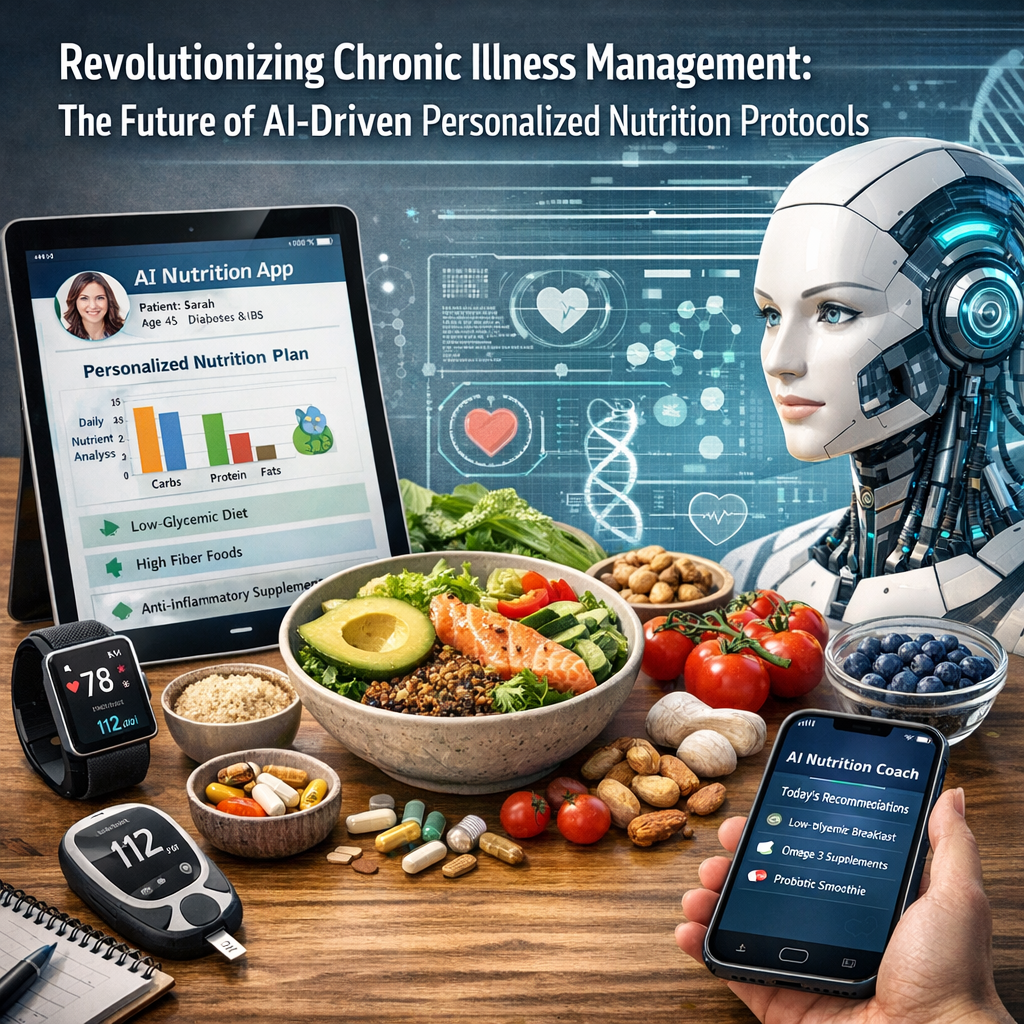
AI-driven nutrition protocols allow for real-time monitoring and adjustments, which are crucial for chronic illness management. For instance, a diabetic patient can benefit from continuous glucose monitoring devices linked with AI systems that suggest diet modifications in real-time, optimizing blood sugar control. Similarly, those with cardiovascular issues can receive personalized nutrition guidance, balancing macronutrients and micronutrients tailored to their specific cardiovascular needs, potentially reducing the dependency on pharmaceuticals.
The integration of AI into nutritional strategies for chronic illnesses fosters a proactive approach, focusing on prevention and optimized management rather than reactive treatment. This cutting-edge approach not only alleviates the burden of chronic diseases but also enhances the patient’s quality of life by reducing symptoms and complications and potentially leading to remission of the illness.
Furthermore, AI-driven personalized nutrition stands as a testament to the advancements in preventive medicine, aligning with the growing demand for natural, homeopathic, and herb-based treatments. These strategies offer an attractive alternative or complement to traditional pharmaceuticals, catering to growing consumer preferences for holistic and integrated healthcare solutions.
Features
The promising potential of AI-driven personalized nutrition is underscored by numerous scientific studies and pilot programs worldwide. One notable project, conducted by the Department of Nutritional Sciences at Stanford University, revealed the efficacy of personalized dietary recommendations using AI technologies. The study demonstrated significant improvements in patients with insulin resistance and obesity who followed personalized nutrition plans based on genetic and phenotypic data [Study Link](https://nutrition.stanford.edu/).
Additionally, the European Union’s “Food4Me” project explored the benefits of personalized nutrition using a similar AI-driven approach. The research indicated that participants receiving customized dietary advice experienced more substantial health improvements compared to those provided with traditional dietary guidelines. This study underlines the importance of integrating individual variability into nutrition plans, further supporting personalized approaches as superior to one-size-fits-all models [Food4Me project](http://www.food4me.org/).
AI systems can also process and integrate a wide variety of data sources, including wearables, medical reports, and genomic data. For instance, companies like Nutrigenomix are pioneering the use of genetic data to inform dietary decisions, working closely with healthcare professionals to design AI-driven nutrition plans that address specific health concerns related to chronic conditions [Nutrigenomix](https://www.nutrigenomix.com/).
Moreover, research by the Mayo Clinic has shown that embracing AI in chronic disease management can significantly enhance predictive capabilities, thereby preventing the need for more invasive and potentially costly medical interventions later [Mayo Clinic AI Research](https://www.mayoclinic.org/).
These studies collectively highlight the transformative power of AI in nutrition science, offering a promising pathway forward in chronic illness management. As AI technology continues to advance, we can anticipate even more refined and targeted nutritional interventions, making significant strides towards a future where personalized healthcare is the norm.
Conclusion
The emergence of AI-driven personalized nutrition protocols is poised to revolutionize the management of chronic illnesses. By leveraging the power of AI, healthcare providers can offer individualized dietary plans that align closely with each patient’s unique health profile. This approach shifts the focus from solely treating symptoms to fostering a proactive and preventive healthcare model. With the support of ongoing research and technological advancements, AI-driven nutrition is on track to become an integral component of holistic chronic illness management. As the demand for natural and personalized health solutions grows, AI-driven nutrition protocols will continue to offer promising avenues for improving patient outcomes and overall wellness, representing a significant step forward in the evolution of modern medicine.
Concise Summary:
AI-driven personalized nutrition is transforming chronic illness management by offering tailored dietary solutions based on individual genetic, lifestyle, and environmental factors. This innovative approach focuses on prevention and optimized management, providing real-time monitoring and adjustments, crucial for conditions like diabetes and cardiovascular issues. AI personalization stands to improve patient outcomes and align with the growing demand for holistic healthcare. Supported by studies from Stanford University, Food4Me, and the Mayo Clinic, this advancement in AI offers promising paths forward in modern medicine, integrating natural health solutions with cutting-edge technology for enhanced patient wellness.

Dominic E. is a passionate filmmaker navigating the exciting intersection of art and science. By day, he delves into the complexities of the human body as a full-time medical writer, meticulously translating intricate medical concepts into accessible and engaging narratives. By night, he explores the boundless realm of cinematic storytelling, crafting narratives that evoke emotion and challenge perspectives.
Film Student and Full-time Medical Writer for ContentVendor.com