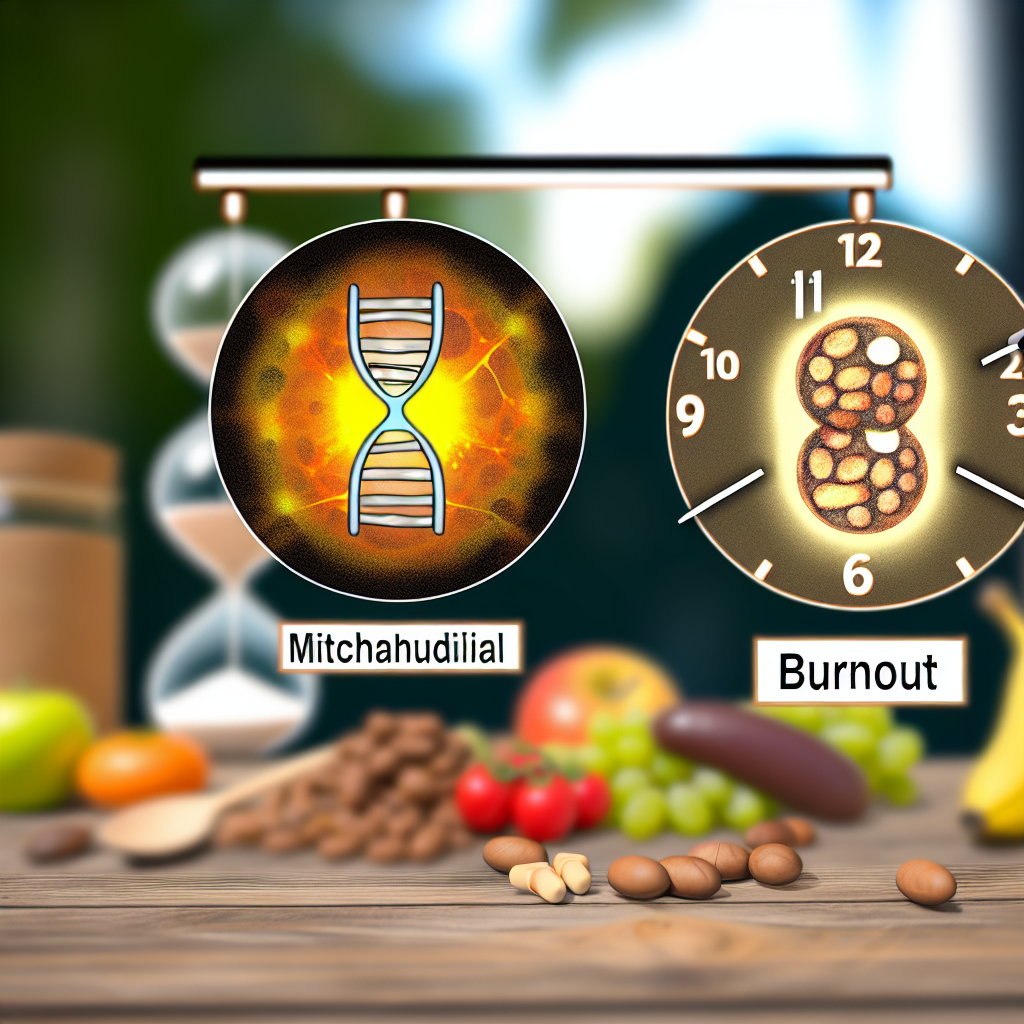
The Hidden Link Between Mitochondrial Nutrition and Burnout: Why Your Energy Crisis Isn’t About Time Management
Introduction
In today’s fast-paced world, the term burnout has become part of everyday vocabulary. As workloads increase and demands on our time seem relentless, the idea that poor time management leads to burnout is widespread. Countless books and seminars promise solutions focusing on planning, prioritizing tasks, and better scheduling. However, an emerging body of research suggests that the underlying cause of exhaustion might not be how we manage our time, but rather how we nourish our mitochondria—the powerhouse of the body’s cells.
Mitochondria are tiny organelles responsible for producing ATP (adenosine triphosphate), the energy currency that fuels cellular functions. The health of our mitochondria directly influences our overall energy levels, impacting both physical stamina and mental acuity. When mitochondria are well-nourished and functioning optimally, we experience sustained energy and vitality. Conversely, when they are undernourished or stressed, we experience fatigue, mental fog, and yes, burnout.
Think of mitochondria as little engines within our cells. Just like any engine, they require the right fuel and maintenance to function properly. The nutrients needed to keep our mitochondrial health optimal include vitamins, minerals, antioxidants, omega-3 fatty acids, and key amino acids. This nutritional support enables them to effectively convert food into energy. Without these essential nutrients, mitochondrial dysfunction can ensue, leading to increased oxidative stress and subsequent energy deficiency.
We often misattribute energy crises to our hectic schedules rather than examining our diet and lifestyle choices, which might be failing to support mitochondrial health. So, while time management strategies are valuable, they need to be complemented with nutritional support to truly combat burnout. Understanding the symbiotic relationship between mitochondrial nutrition and energy levels opens a new, insightful perspective on how to tackle burnout effectively. This article explores this hidden link, sheds light on scientific research supporting the role of mitochondrial nutrition, and offers insights on how to harness its potential to regain your energy.
Features
Extensive research has begun to uncover the pivotal role mitochondria play in energy metabolism and burnout. A study published in the journal [*Cell Metabolism*](https://www.cell.com) emphasizes the importance of a nutrient-rich diet in maintaining mitochondrial function. The study found that essential nutrients such as Coenzyme Q10, magnesium, B-vitamins, and Omega-3 fatty acids are crucial for supporting mitochondrial health. These nutrients serve as cofactors in energy production processes, enhance antioxidant defense, and promote efficient mitochondrial repair and replication.
Another study published in the [*Journal of Clinical Investigation*](https://www.jci.org) highlights how mitochondrial dysfunction is linked to increased oxidative stress and inflammation—two factors known to contribute to fatigue and mental exhaustion. The research underscores the importance of antioxidants like glutathione and vitamins C and E in mitigating oxidative damage, preserving mitochondrial integrity, and the capacity to produce energy.
Professor Bruce Ames, a biochemist at the University of California, has described a phenomenon called “triage theory,” suggesting that when the body is deficient in vitamins and minerals, it prioritizes immediate survival over long-term health, including mitochondrial function. This results in suboptimal energy production and eventual cellular dysfunction, fostering an environment conducive to burnout.
Furthermore, the relationship between physical activity and mitochondrial health cannot be overstated. Exercise has been shown to stimulate mitochondrial biogenesis—the creation of new mitochondria—increasing the capacity for energy production. A study in [*The Science of Translational Medicine*](https://stm.sciencemag.org) found that regular physical activity, paired with proper nutritional support, significantly improves mitochondrial efficiency and energy levels.
Building on these findings, experts advocate a holistic approach to combating burnout by integrating tailored nutritional strategies and lifestyle changes focused on enhancing mitochondrial health. Incorporating foods rich in essential nutrients, ensuring adequate sleep, engaging in regular physical exercise, and minimizing stress are cornerstones of a mitochondrial-friendly lifestyle. These steps not only address the physical aspects of energy production but also contribute to improved mental health and reduced burnout symptoms.
Conclusion
Burnout is a complex condition often mischaracterized as solely a result of poor time management. However, emerging evidence suggests a crucial link between mitochondrial dysfunction and energy depletion. By recognizing the essential role of mitochondrial nutrition, we can address potential deficiencies and optimize our overall energy levels more effectively than with time management techniques alone.
Instead of constantly adjusting your schedule, consider making dietary and lifestyle changes to support mitochondrial health. Incorporating nutrient-dense foods, regular exercise, and stress-reducing practices can help improve energy production at the cellular level. Taking a holistic approach by aligning these elements can not only enhance vitality but also provide a sustainable solution to overcoming burnout.
Through a better understanding of the relationship between diet, lifestyle, and mitochondrial function, individuals can take actionable steps towards improved energy and wellbeing. This deeper level of insight empowers us all to tackle burnout from a cellular perspective, creating a foundation for more enduring health and energy.
References
1. [Ventura-Clapier, R., Garnier, A., & Veksler, V. (2008). Mitochondrial function in skeletal muscle of heart failure patients and models. *Journal of Clinical Investigation*](https://www.jci.org/articles/view/25695).
2. [Lesnefsky, E. J., & Hoppel, C. L. (2003). Oxidative stress and aging: Mitochondrial oxidative damage in aging and age-related diseases. *The Journal of Clinical Investigation*](https://www.jci.org/articles/view/17748).
3. [Ames, B. N. (2006). Low micronutrient intake may accelerate the degenerative diseases of aging through allocation of scarce micronutrients by triage. *Proceedings of the National Academy of Sciences*](https://www.pnas.org/lookup/doi/10.1073/pnas.0608757103).
4. [Holloszy, J. O. (2008). Regulation of mitochondrial biogenesis and GLUT4 expression by exercise. *Comprehensive Physiology*](https://doi.org/10.1002/cphy.cp110109).
Concise Summary:
Emerging research highlights a crucial connection between mitochondrial health and burnout, suggesting that cellular energy deficits might underlie exhaustion more than poor time management. Mitochondria generate ATP, essential for sustaining energy. A nutrient-rich diet, rich in key vitamins, omega-3 fatty acids, and antioxidants, combined with regular exercise, can optimize mitochondrial function and reduce burnout symptoms. This article advocates adopting dietary and lifestyle changes to support mitochondrial health, offering a comprehensive approach to overcoming burnout with lasting improvements in vitality and wellbeing by focusing on cellular energy production.

Dominic E. is a passionate filmmaker navigating the exciting intersection of art and science. By day, he delves into the complexities of the human body as a full-time medical writer, meticulously translating intricate medical concepts into accessible and engaging narratives. By night, he explores the boundless realm of cinematic storytelling, crafting narratives that evoke emotion and challenge perspectives.
Film Student and Full-time Medical Writer for ContentVendor.com