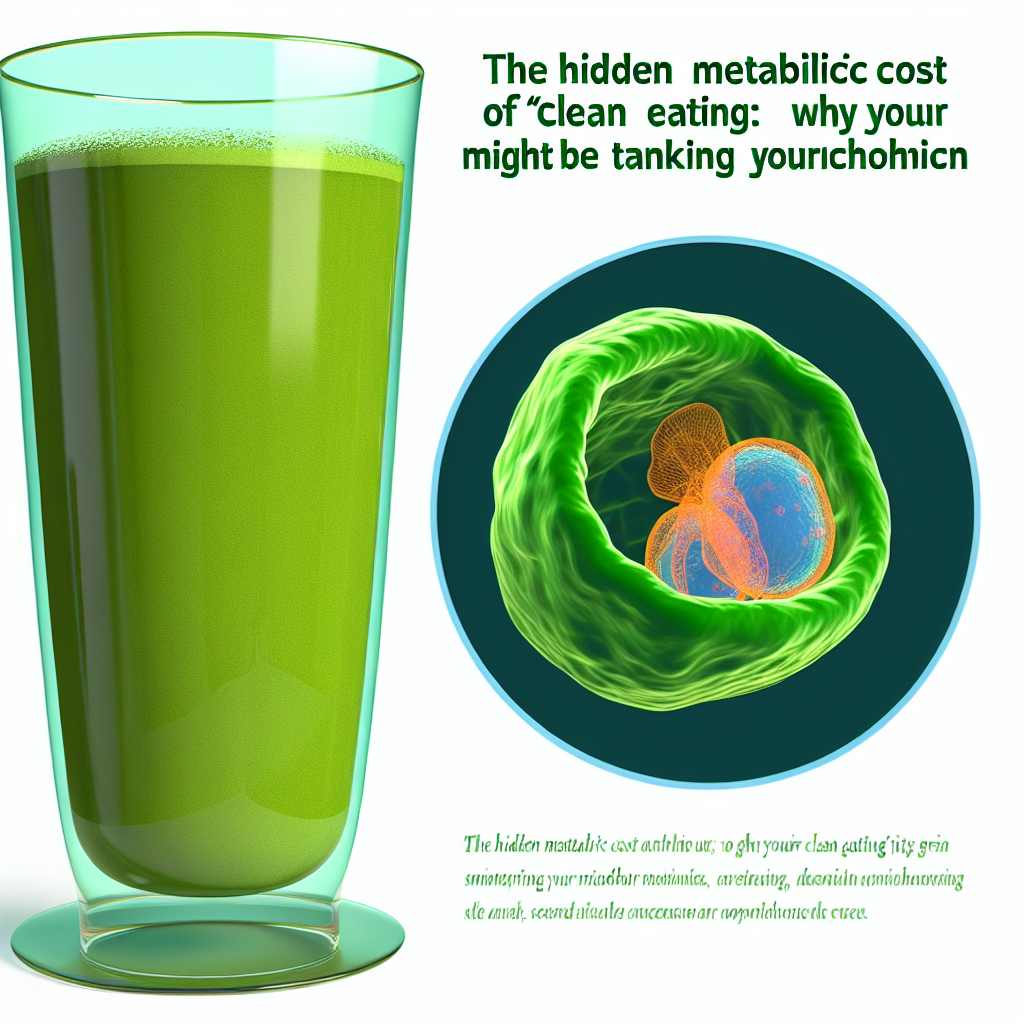
The Hidden Metabolic Cost of “Clean Eating”: Why Your Green Smoothie Might Be Tanking Your Mitochondria
In recent years, the clean eating trend has gained vast popularity, with many touting the life-transforming benefits of consuming green smoothies, organic produce, and whole foods. While promoting a diet rich in fruits and vegetables is often linked with numerous health benefits, lurking beneath the surface are potential metabolic repercussions that enthusiasts might unknowingly face. Our mitochondria, the powerhouse of cells, play a pivotal role in overall energy production and metabolic health. There is emerging concern about how certain “clean” dietary practices might inadvertently impair mitochondrial function, thereby affecting our energy levels and overall well-being.
A growing body of evidence suggests that some components of green smoothies—often a staple in clean eating regimens—could be problematic if consumed in excess. Oxalates, which are naturally occurring compounds found in leafy greens like spinach and kale, can accumulate in the body, potentially leading to the formation of kidney stones and negatively impacting mitochondrial health. High oxalate levels might overwhelm our bodies’ ability to metabolize these compounds efficiently, which could hinder the mitochondria’s capacity to produce energy effectively.
Additionally, a significant aspect of clean eating is the frequent avoidance of all processed foods, with little room for moderation. While this approach is well-intentioned, it may overlook the benefits of certain food-processing techniques that enhance nutrient absorption or preserve beneficial compounds. For instance, some antioxidants in vegetables become more bioavailable after cooking. Consequently, the rigorous avoidance of any processed food might inadvertently limit the availability of nutrients essential for mitochondrial health, such as Coenzyme Q10 and certain amino acids, which are vital co-factors in the mitochondria’s energy production pathways.
Moreover, orthorexia—a condition characterized by an unhealthy obsession with eating “pure” or “clean” foods—can lead to an unbalanced dietary intake. This obsession can cause nutritional deficiencies that further stress our cellular powerhouses. Consuming an excessively restrictive diet with limited diversity may deprive the body of critical nutrients, such as B-vitamins, magnesium, and iron, which play direct roles in mitochondrial function and energy metabolism.
Features
Scientific studies are beginning to unravel the complex relationship between diet and mitochondrial performance. A 2018 study published in the *Journal of the American Society of Nephrology* investigated the effects of high oxalate consumption, commonly found in green smoothies. It highlighted how excessive intake could lead to oxalate accumulation, impair kidney function, and subsequently burden mitochondrial efficiency (source: [Journal of the American Society of Nephrology](https://jasn.asnjournals.org)).
Further research in the field of mitochondrial health has indicated the importance of a diverse diet to ensure adequate intake of micronutrients crucial for mitochondrial function. A 2019 study published in the *Journal of Nutrition* discussed the role of B-vitamins, particularly B12 and B6, in mitochondrial energy production and emphasized the danger of deficiency due to overly restrictive dietary practices (source: [Journal of Nutrition](https://nutrition.org)).
Additionally, findings from a 2020 study in *Cell Metabolism* explored how an imbalance in the intake of omega-3 and omega-6 fatty acids, resulting from a disproportionate focus on certain “clean” foods, might lead to increased inflammation and oxidative stress, impairing mitochondrial function (source: [Cell Metabolism](https://cell.com)).
Furthermore, Angela Duckworth and colleagues published research in the *British Journal of Nutrition* discussing orthorexia and its potential to contribute to nutritional deficiencies that impair mitochondrial function. The paper highlights how an overwhelming focus on raw or only plant-based clean foods can limit essential nutrients needed for optimal cell function (source: [British Journal of Nutrition](https://cambridge.org)).
Collectively, these studies underline the necessity for a holistic approach to clean eating—one that encompasses moderation, diversity, and scientifically backed dietary choices to safeguard mitochondrial health and overall well-being.
Conclusion
While the clean eating movement promotes many beneficial dietary habits, it is crucial to recognize and mitigate the potential metabolic costs. To maintain robust mitochondrial function, and thus a healthy energy metabolism, a balanced and diverse diet that occasionally incorporates well-processed foods is essential. Moderation should be the guiding principle—consuming a variety of foods that include well-chosen processed items, alongside fresh produce, can provide a rich array of nutrients to support mitochondrial health.
Incorporating a wider range of foods not only satisfies dietary needs but also reduces the risk of nutritional imbalances often observed with strict clean eating practices. Ultimately, informed dietary choices grounded in scientific research can lead to sustainable and long-lasting health benefits. As the conversation around clean eating evolves, it is vital to continuously assess and adapt dietary habits to promote optimal metabolic health and vitality for life.
Concise Summary:
The popularity of clean eating may have hidden downsides for mitochondrial health. While rich in fruits and vegetables, excessive intake of oxalates from green smoothies and strict avoidance of processed foods can impede energy production and cause nutritional deficiencies. Research underscores the importance of dietary diversity and moderation for maintaining metabolic health. A balanced approach, incorporating some processed foods and ensuring micronutrient intake, can support long-term well-being. This informed perspective promotes sustainable dietary habits vital for robust energy metabolism and overall vitality.

Dominic E. is a passionate filmmaker navigating the exciting intersection of art and science. By day, he delves into the complexities of the human body as a full-time medical writer, meticulously translating intricate medical concepts into accessible and engaging narratives. By night, he explores the boundless realm of cinematic storytelling, crafting narratives that evoke emotion and challenge perspectives.
Film Student and Full-time Medical Writer for ContentVendor.com