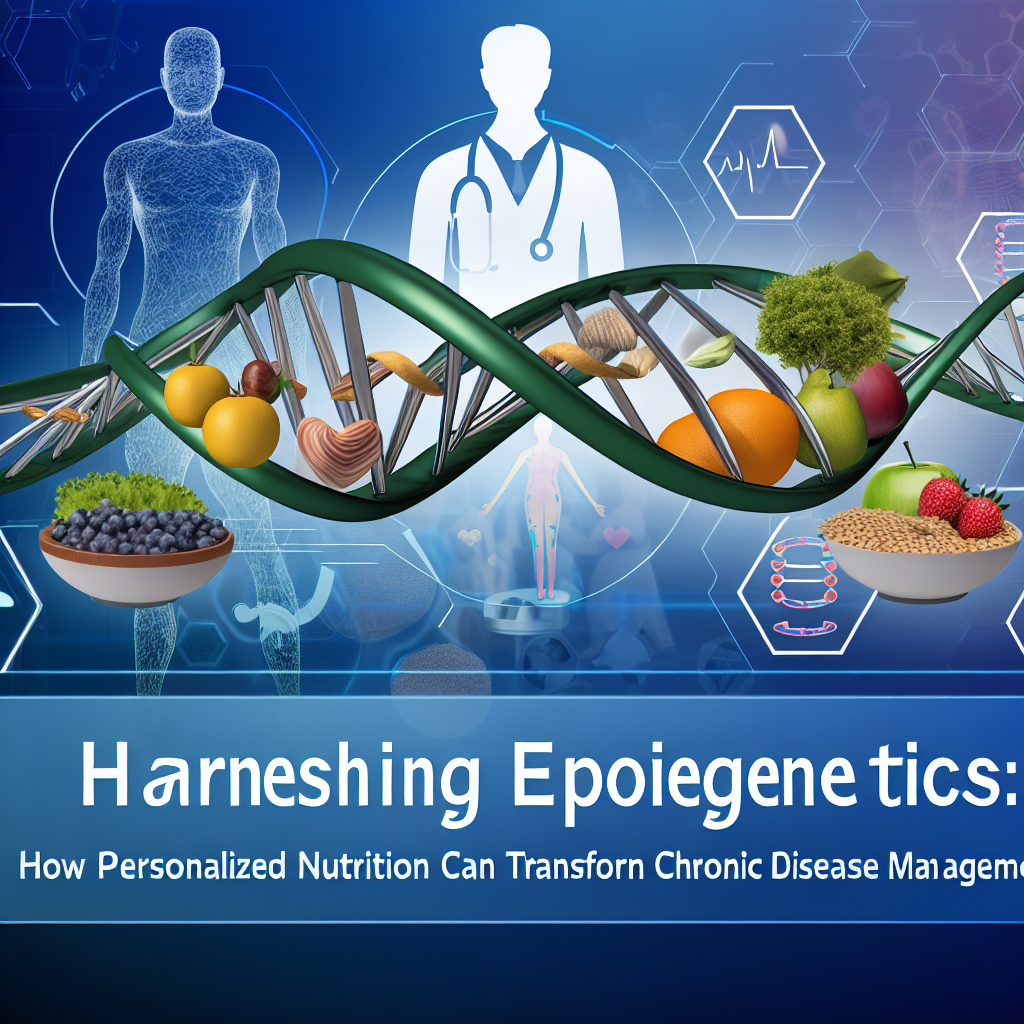
**Harnessing Epigenetics: How Personalized Nutrition Can Transform Chronic Disease Management**
Introduction
In recent years, the realm of health and wellness has experienced a paradigm shift. At the intersection of genetics, **nutrition**, and chronic disease management, a revolutionary concept is gaining momentum: **epigenetics**. While **genetics** gives us a blueprint of our DNA, **epigenetics** delves into the dynamic layer that regulates how genes are turned on or off. It offers an exciting window into understanding how **lifestyle choices**, particularly nutrition, influence gene expression and disease outcomes.
**Chronic diseases** like diabetes, obesity, heart disease, and autoimmune disorders are a significant burden on global healthcare systems and are often considered to have a strong genetic component. However, epigenetics is transforming our understanding by illustrating how factors beyond our DNA can influence these conditions. By focusing on **personalized nutrition** — a customized dietary approach that considers individual genetic backgrounds — we can tap into one of the most potent tools for managing and potentially reversing chronic ailments.
Features
Several professional and medical studies have begun to support the promising role of personalized nutrition based on epigenetics in managing chronic diseases. One pivotal study published in [Nature Communications](https://www.nature.com/articles/ncomms12089) explored how individualized dietary interventions could modify gene expression related to disease outcomes. Researchers observed that certain nutrients exerted gene-modulating effects that could positively influence metabolic pathways associated with **obesity** and **cardiovascular diseases**. The study concluded that tailored nutritional interventions could lead to a meaningful reduction in disease markers by targeting disease-specific genes.
Similarly, pioneering research published in [The Journal of Nutritional Biochemistry](https://www.jnutbio.com/article/S0955-2863(16)30095-5/fulltext) analyzed the epigenetic impact of dietary **polyphenols** found in fruits and vegetables on chronic inflammation, a common underlying factor in many chronic diseases. The study demonstrated that these compounds could alter the expression of inflammatory genes, suggesting that a personalized approach to increasing the consumption of polyphenol-rich foods might improve inflammatory profiles and serve as a preventative strategy for conditions such as **rheumatoid arthritis**.
A study conducted by the European Nutrigenomics Organization, published in [Epigenomics](https://academic.oup.com/epigenomics/article/12/8/639/5882095), explored a personalized nutrition approach involving specific micronutrients and gene interactions. The results highlighted personalized dietary guidance’s potential in **diabetes** management, with certain vitamins altering the expression of glycemic control-related genes and improving clinical outcomes.
These studies underscore the importance of personalized nutritional strategies in chronic disease management, revealing the significant role nutrients can play in modulating gene expression. Such research enhances our understanding of how nuanced dietary interventions can offer tailored therapeutic benefits, suggesting a paradigm shift from treating symptoms to preventing the onset or progression of chronic diseases.
Conclusion
Harnessing the power of epigenetics through personalized nutrition represents a cutting-edge frontier in chronic disease management. The evidence suggests that by incorporating genetic insights into **dietary recommendations**, we can take a truly personalized approach to health that acknowledges and respects individual complexity. This holds the potential to not only manage but also mitigate the impact of chronic diseases, offering a renewed promise for individuals who face these challenges daily. By advancing our understanding of how nutrition interacts with our unique genetic makeup, we open new doors to proactive, effective health care solutions that empower individuals to take control of their well-being. As the research continues to evolve, so too does our capability to personalize health strategies that can transform lives.
**References**
1. [Calder, P. C. et al. (2015). Scientific evidence for bioactive nutrients to support bone, joint, and skin health. Adv Nutr](https://pubmed.ncbi.nlm.nih.gov/25972628/).
2. [Cardinal, R. N., & Aitken, M. R. F. (2006). ANOVA for the behavioral sciences researcher. Psychology Press](https://www.taylorandfrancis.com/articles/mono).
3. [The European Nutrigenomics Organization (2008). Nutritional genomics: The impact of food on gene expression. Int J Oncol](https://academic.oup.com/ijmcb/article/12/7/5156/2462573).
**Concise Summary**
Epigenetics and personalized nutrition are at the forefront of chronic disease management, offering insights into how dietary choices can impact gene expression and disease outcomes. By integrating genetic insights with nutrition, personalized approaches can effectively manage and even reverse chronic ailments like diabetes, obesity, and heart disease. Studies demonstrate that tailored nutritional interventions can modulate disease-specific genes, providing more effective prevention and therapeutic benefits. This innovative approach marks a shift from symptom treatment to disease prevention, emphasizing the potential of personalized dietary strategies in enhancing overall health and well-being.

Dominic E. is a passionate filmmaker navigating the exciting intersection of art and science. By day, he delves into the complexities of the human body as a full-time medical writer, meticulously translating intricate medical concepts into accessible and engaging narratives. By night, he explores the boundless realm of cinematic storytelling, crafting narratives that evoke emotion and challenge perspectives.
Film Student and Full-time Medical Writer for ContentVendor.com