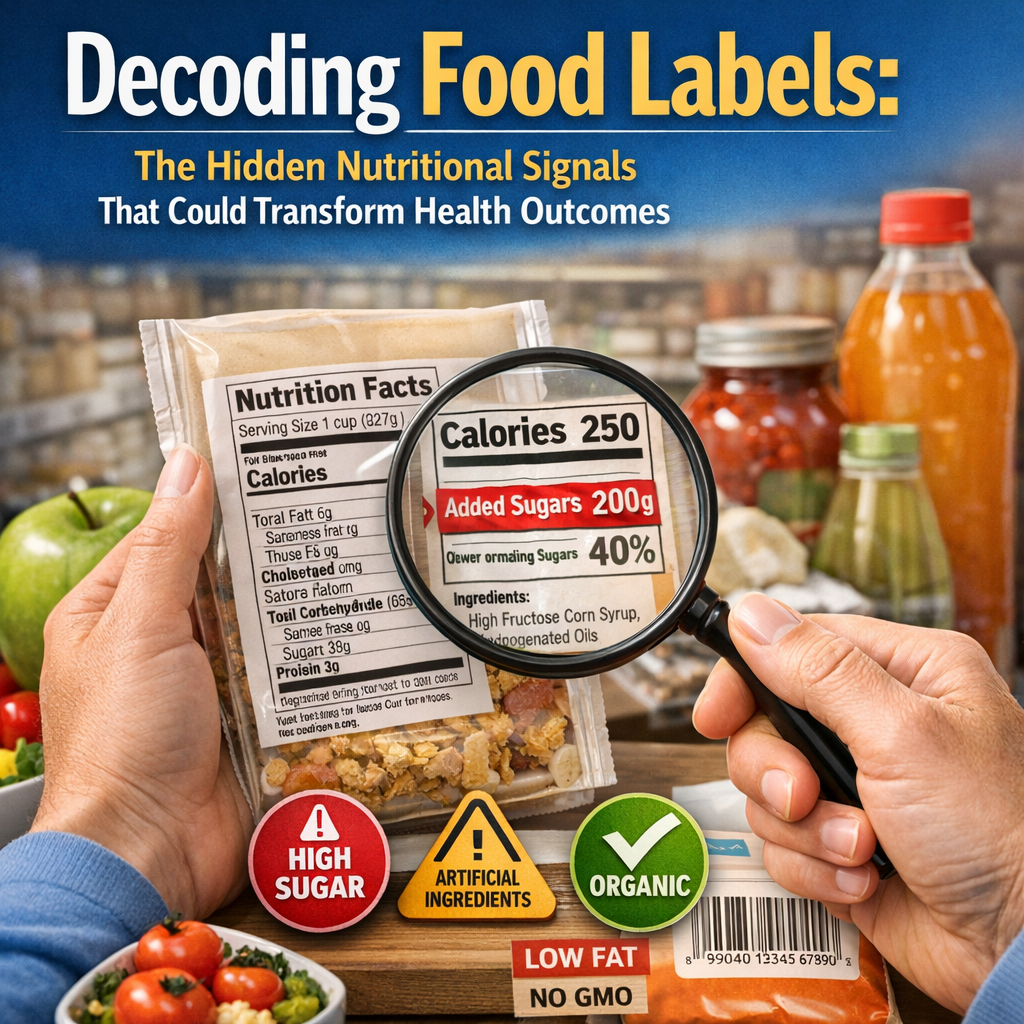
Decoding Food Labels: The Hidden Nutritional Signals That Could Transform Health Outcomes
Introduction
In today’s health-conscious world, many of us are becoming more attentive to what we eat, yet the intricate codes displayed on food labels often remain a mystery to average consumers. As a rising number of individuals seek natural cures, homeopathic solutions, and herbal treatments, understanding how to interpret these labels can be transformative for health outcomes. The typical food label is a powerhouse of nutritional information, offering more than just the basics of calories and fat content. It is a window into the nutrient profile of the food, disclosing hidden sugars, unhealthy fats, and essential vitamins and minerals. Yet, very few can navigate these labels with precision.
As chronic diseases become increasingly prevalent, fueled in part by poor dietary choices, the task of decoding food labels has never been more critical. By understanding these labels, individuals can make informed choices that align with natural living philosophies. Embracing the ability to decipher label claims like “low fat,” “organic,” or “natural” can guide consumers toward reduced intake of harmful additives and increased consumption of beneficial nutrients, thereby supporting homeopathic and herbal interventions aimed at detoxification and health maintenance.
These labels are often designed to be consumer-friendly yet can be misleading. For instance, the term “natural” is not always synonymous with healthy; products labeled as such can still contain artificial ingredients or high levels of sugar and sodium. Similarly, “organic” products should still be scrutinized for overall nutritional value. By ensuring an understanding of ingredients lists, nutritional panels, and health claims, consumers can better navigate the grocery aisles to support complex dietary needs.
Features
Studies from trusted institutions have consistently highlighted the impact of interpreting food labels for improved health outcomes. A pivotal study by the Centers for Disease Control and Prevention (CDC) found that individuals who frequently engage in comprehending nutrition labels often have better dietary practices and healthier body weights. Moreover, a research article in the *Journal of the Academy of Nutrition and Dietetics* concluded that education about food labels leads to decreased intake of unhealthy nutrients such as trans fats and sugars, alongside increased intake of fibers and essential nutrients.
Furthermore, Harvard School of Public Health has conducted a thorough investigation on food choices derived from label literacy. Their findings underscore the significance of comprehending food labels for managing and preventing conditions such as diabetes, cardiovascular diseases, and obesity. The study also elaborates on how reading labels supports the incorporation of heart-healthy polyunsaturated fats instead of trans fats, which are directly correlated with decreased cardiovascular risk.
The FDA mandates nutrition facts panels that include macronutrients, vitamins, and minerals. Recent updates emphasize added sugars, highlighted due to their excessive contribution to non-communicable diseases. According to research from the American Heart Association, minimizing added sugars and saturated fats is supported by label literacy, contributing to reduced cardiovascular risk.
The World Health Organization (WHO) aligns with these findings, informing that nutrition-label education is pivotal in public health nutrition strategies, impacting food security and diet-related diseases globally. Through accurate label reading, individuals can integrate holistic dietary practices with homeopathic and herbal therapeutics, optimizing their overall wellbeing.
Conclusion
Understanding food labels is akin to unlocking a nutritional code that can significantly influence health outcomes and align with natural and homeopathic practices. By learning to interpret these labels effectively, consumers are empowered to make informed decisions, reducing their intake of harmful additives and nurturing their diet with essential nutrients. This knowledge is crucial not just for maintaining dietary goals but also for maximizing the efficacy of natural cures, therapies, and wellness strategies.
For those seeking to improve their health through holistic means, decoding food labels allows for an alignment of diet with broader health objectives. Through continued education and application, a focus on label literacy will enhance the capability to make food choices that are health-promoting and aligned with a natural lifestyle, ultimately transforming health outcomes for the better.
References
– [CDC Study on Nutrition Label Use](https://www.cdc.gov/nchs/data/series/sr_10/sr10_268.pdf)
– [Journal of the Academy of Nutrition and Dietetics Article](https://www.jandonline.org/article/S2212-2672(20)30094-5/fulltext)
– [Harvard School of Public Health Guide on Reading Food Labels](https://www.hsph.harvard.edu/nutritionsource/nutrition-labels-a-tool-to-help-use-the-right-fats/)
– [American Heart Association Scientific Statement](https://www.ahajournals.org/journal/circres)
– [World Health Organization Guidance on Nutrition Labeling](https://www.who.int/nutrition/topics/frontendlabelling/en/)
Concise Summary: Understanding food labels is crucial to make informed dietary choices that promote health and prevent chronic diseases. Labels reveal more than just calorie content—they unveil sugars, unhealthy fats, and essential nutrients. Decoding them supports natural and homeopathic health strategies. Studies by the CDC, Harvard, and WHO emphasize the impact of label literacy on improving diet and health. By comprehending these labels, consumers can align their diets with holistic health objectives, reduce harmful additives, and boost nutrient intake, transforming their health outcomes positively.

Dominic E. is a passionate filmmaker navigating the exciting intersection of art and science. By day, he delves into the complexities of the human body as a full-time medical writer, meticulously translating intricate medical concepts into accessible and engaging narratives. By night, he explores the boundless realm of cinematic storytelling, crafting narratives that evoke emotion and challenge perspectives.
Film Student and Full-time Medical Writer for ContentVendor.com