The Metabolic Matrix: Why Your Macros Don’t Work Without Mitochondrial Nutrition
In today’s health-conscious world, there’s a significant emphasis on macronutrients—proteins, fats, and carbohydrates—when structuring a diet for weight loss or muscle gain. Yet, many find that despite diligently tracking and adjusting their macros, achieving their desired results remains elusive. This conundrum often leaves one wondering: Why is the scale not reflecting their efforts? The answer could lie within the microscopic powerhouses of our cells, the mitochondria.
The Role of Mitochondria in Diet and Nutrition
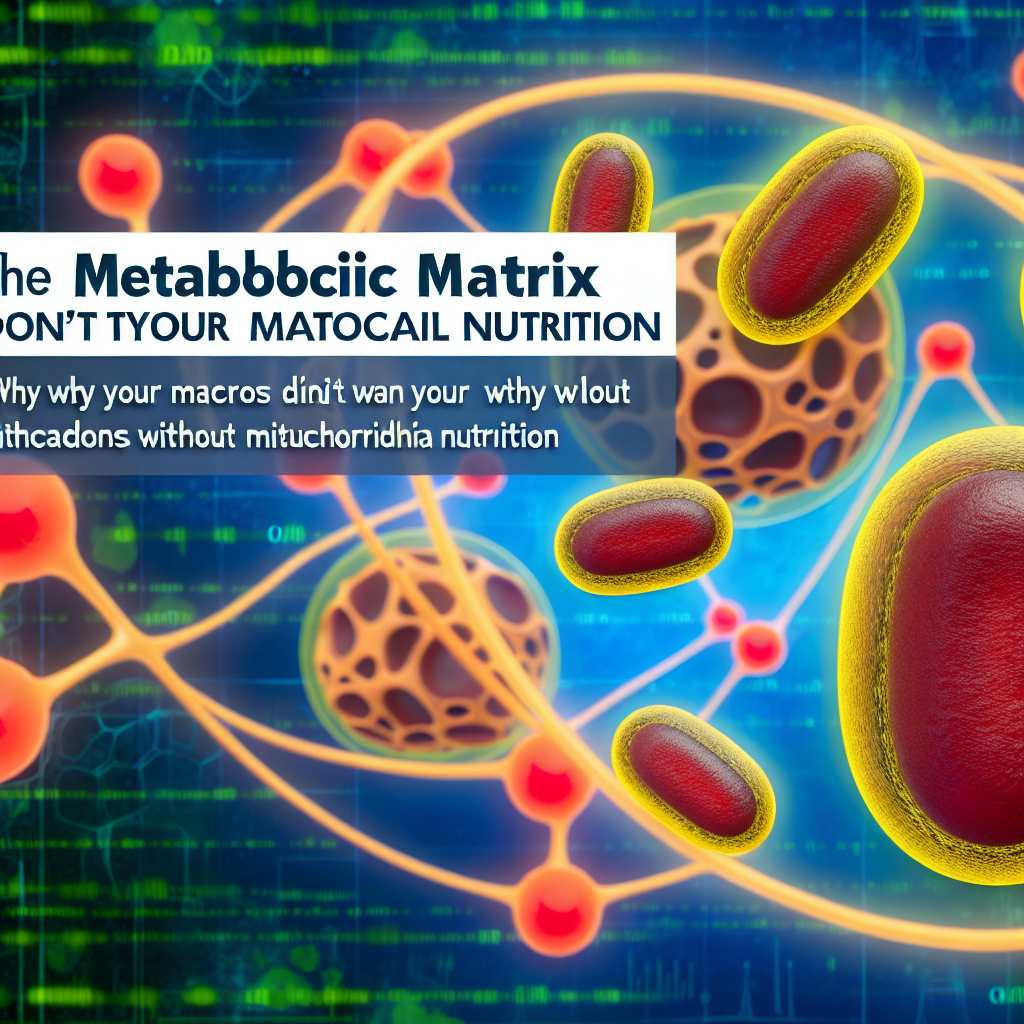
Mitochondria are sometimes overlooked in the broader discussion of diet and nutrition. These cellular organelles are responsible for generating the energy that fuels nearly every cellular process, primarily through the production of adenosine triphosphate (ATP). They convert the food we eat into usable energy. Without optimizing mitochondrial function, even the most well-balanced macro plan might fall short.
Consider the traditional approach to macronutrient science. A diet might recommend 30% protein, 40% carbohydrates, and 30% fats. While it may seem perfect on paper, inadequate mitochondrial nutrition can impair this balance. Mitochondria require an array of vitamins, minerals, and co-factors to function optimally, such as Coenzyme Q10, magnesium, and certain B vitamins. If these nutrients are deficient, the mitochondria cannot adequately convert macronutrients into the energy needed to power our bodies.
Moreover, mitochondrial dysfunction, characterized by inefficient energy production and increased oxidative stress, is linked to various health issues, including metabolic disorders, increased fatigue, and even chronic diseases. The interplay between your macros and the health of your mitochondria is crucial for an efficient metabolism. When your mitochondria are not performing at their best, no macro balance can compensate for that enzymatic and energetic shortfall.
Features: Applicable Professional or Medical Studies
Several studies underscore the importance of mitochondrial health in relation to metabolism. According to a research article published in [*Nature Reviews Molecular Cell Biology*](https://www.nature.com/articles/nrm2422), mitochondrial dysfunction is directly linked to metabolic disorders such as obesity and type 2 diabetes. The study explains how impaired mitochondrial function affects insulin sensitivity and increases fat mass owing to disrupted energy production and balance.
Furthermore, a study from [*The Journal of Clinical Investigation*](https://www.jci.org/articles/view/65884) explored mitochondrial adaptability in response to nutritional changes. The research demonstrated that optimally functioning mitochondria can better endure and adapt to dietary-induced changes, which directly influences how effectively the body can utilize macros for energy and other physiological developments.
The mitochondrial theory of aging, as presented in the [*Journal of Neuroscience Research*](https://onlinelibrary.wiley.com/doi/10.1002/jnr.24815), suggests that oxidative damage and mitochondrial DNA mutations contribute to cellular aging and malfunction. Ensuring proper mitochondrial nutrition is regarded as a form of protective intervention to maintain cellular health, thereby ensuring efficiency in metabolic processes.
Integrating these insights into a dietary regimen involves more than just hitting macro targets. It’s about ensuring the presence of key nutrients to boost mitochondrial wellness. For instance, consuming a diet rich in antioxidants and anti-inflammatory agents helps in reducing oxidative stress on mitochondria. Foods such as leafy greens, nuts, seeds, and fatty fish are laden with vitamins and minerals that are central to mitochondrial health.
Conclusion
In conclusion, while macros are essential, focusing solely on them without considering mitochondrial nutrition may not deliver the expected health and fitness outcomes. Every cell’s powerhouse, the mitochondria, plays a pivotal role in converting macronutrients into energy. Ensuring these organelles are well-nourished and functioning optimally is key to a successful diet and overall health. By integrating a comprehensive diet plan that focuses not only on macronutrient distribution but also on enriching mitochondrial health through essential micronutrients, individuals can enhance their metabolic efficiency and overall vitality. Balancing macros with mitochondrial nutrition isn’t just about achieving aesthetic goals—it’s a profound step toward holistic wellbeing.
Concise Summary
Macronutrients—proteins, fats, and carbohydrates—are crucial in diet planning for weight loss or muscle gain. However, mitochondria, the energy producers in cells, play a vital role that is often overlooked. To optimize metabolism and achieve health goals, one must also focus on mitochondrial nutrition, which requires vitamins, minerals, and co-factors. Studies show links between mitochondrial dysfunction and metabolic disorders, highlighting its importance. Balancing macros with mitochondrial health through nutrients found in foods like leafy greens and fatty fish enhances metabolism and overall wellbeing, paving the way for holistic health and not just aesthetic success.

Dominic E. is a passionate filmmaker navigating the exciting intersection of art and science. By day, he delves into the complexities of the human body as a full-time medical writer, meticulously translating intricate medical concepts into accessible and engaging narratives. By night, he explores the boundless realm of cinematic storytelling, crafting narratives that evoke emotion and challenge perspectives.
Film Student and Full-time Medical Writer for ContentVendor.com